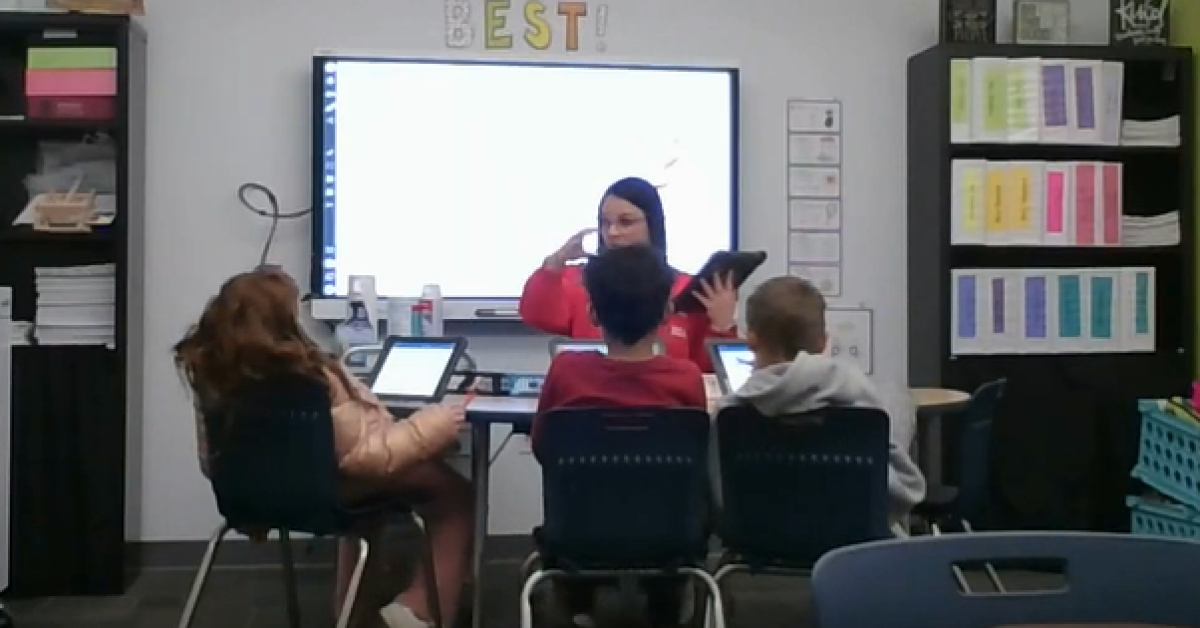
2026-2027 Running Strong for American Indian Youth® Dreamstarter Teacher Tara Crenshaw is a reading specialist at Atoka Elementary School in Atoka, Oklahoma.
Her project, “Strengthening Literacy Through Evidence-Based Phonics Instruction,” aims to strengthen literacy outcomes for students by implementing the 95% RAP (Reading Achievement Program) Phonics Program and providing comprehensive teacher training to ensure effective, high-quality instruction.
“Many students continue to struggle with foundational reading skills, including phonemic awareness, decoding, and fluency, which are essential for becoming confident, proficient readers,” Tara stated in her grant application.
“Without targeted support, these gaps can persist and impact overall academic success.”
The Atoka School District in southeastern Oklahoma is located within the Choctaw Nation of Oklahoma, serving a diverse student population with approximately 43 percent of students identifying as members of a Native American tribe, including Choctaw, Chickasaw, Muscogee (Creek), Citizen Potawatomi, Comanche, Cherokee, Sac & Fox, Seminole, Navajo, Cheyenne and Arapaho.
Tara notes that Atoka Elementary is a Title I school where the majority of students come from economically disadvantaged backgrounds and qualify for free or reduced-price lunch.
In her role as a reading specialist, Tara told us she works closely with students and teachers to support literacy development, provide targeted interventions for struggling readers and help implement effective, research-based practices.
She also collaborates with educators to analyze student data, strengthen reading instruction and ensure that all students have access to high-quality literacy support.
“My position allows me to directly impact both student achievement and teacher effectiveness in building strong foundational reading skills,” says Tara.
“The students I serve are often reluctant readers who have experienced ongoing challenges with foundational literacy skills.
“Many struggle with phonemic awareness, decoding, and fluency, which can lead to frustration, decreased confidence, and a lack of engagement in reading.
“Over time, these difficulties can cause students to fall further behind their peers and develop negative attitudes toward learning.
“Targeted, research-based interventions are critical to breaking this cycle.
“By providing structured support and explicit instruction, we can help these students build the skills they need, regain confidence, and begin to see themselves as capable, successful readers.”
She explained that her grant’s mission is to empower struggling and reluctant readers by providing high-quality, structured literacy instruction and building teacher capacity to meet diverse learning needs, resulting in increased confidence, engagement, and reading success for all students.
Among the objectives is to improve students’ foundational literacy skills in phonemic awareness and decoding. To achieve this goal, she will implement the 95% Phonics RAP Program “with fidelity across targeted classrooms and intervention groups.
“Students will receive consistent, explicit and systematic phonics instruction daily,” she said, adding that progress will be monitored using regular skills-based assessments to ensure students are mastering key concepts and to guide instructional adjustments.
Another objective is to increase reading fluency and overall reading proficiency among struggling and reluctant readers.
“Students will participate in structured intervention sessions that incorporate repeated reading, guided practice, and cumulative review embedded within the 95% program,” says Tara.
A third objective is to establish a sustainable, data-driven literacy framework to support long-term student success.
“We will develop a system for ongoing data collection and analysis, including universal screeners and progress monitoring tools,” she told us. “Teachers and the reading specialist will meet regularly to review data, adjust instruction, and ensure interventions are responsive to student needs.
“This structured approach will create a sustainable model for continuous literacy improvement beyond the grant period.”
Tara will use her $10,000 grant to provide three 95% Phonics program kits along with professional development for teachers, equipping them with the knowledge and tools needed to deliver structured, evidence-based literacy instruction.
“By building teacher capacity and ensuring consistent implementation, this initiative will directly support struggling readers and promote measurable growth in literacy achievement.”
Tara said the project is critically important to her school and community “because literacy is the foundation for all academic success and lifelong opportunity.
“Many of our students face significant barriers to academic achievement, including limited access to resources and persistent gaps in foundational reading skills.
“A large portion of our student population consists of struggling or reluctant readers, and without targeted, effective intervention, these gaps will continue to widen over time.
“By implementing the 95% Phonics RAP Program and providing high-quality teacher training, this project directly addresses those needs by equipping educators with the tools to deliver explicit, research-based instruction.
“Strengthening literacy skills not only improves reading outcomes but also increases student confidence, engagement, and overall academic performance across all subject areas.”
Tara also commented that the impact of this project extends beyond the classroom.
“Strong literacy skills empower students to become active, informed members of their community, better prepared for future educational and career opportunities.
“Investing in literacy is an investment in the long-term success and well-being of our students, families, and the broader community we serve.
“Ultimately, this grant aims to create a sustainable system of high-quality reading instruction that empowers both educators and students, leading to improved reading proficiency and long-term academic success.”