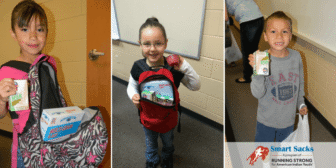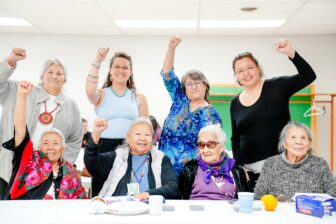
Running Strong for American Indian Youth supports Native communities in growing, accessing, and distributing healthy, culturally relevant foods through community gardens, mobile and farmers markets, and local food distribution programs that both alleviate hunger and restore self-sufficiency across Indian Country.
For over two decades, Running Strong for American Indian Youth has had a transformative impact on food sovereignty across tribal communities, strengthening local food systems, restoring traditional agricultural practices, and enabling Native people to feed their families and their nations.
Since its founding in 1986 by Billy Mills (Oglala Lakota), Running Strong has emphasized sovereignty — empowering Native communities to define and sustain their own food systems.
Beginning with gardens on the Pine Ridge Reservation, this work has grown into a network of community-based food sovereignty initiatives across Indian Country.
Medicine Root Gardening
The Medicine Root Garden Program, operated by the Oyate Ta Kola Ku Community Center, is Running Strong’s cornerstone food sovereignty initiative. The program combines education, economic opportunity, and community health.
The program offers gardening classes, operates greenhouses and gardens, as well as a mobile market and farmers market.
Running Strong Executive Director Sydney Mills Farhang reported that in 2025, Running Strong continued to provide foundational support for the Oyate Teca Project’s Medicine Root Garden Program, a nine-month garden education program which teaches community members how to grow, harvest, prepare and eat fresh produce on Pine Ridge.
Running Strong provided hands-on instruction and the tools, seedlings and fencing to plant 95 student gardens.
Additionally, we operated our own extensive demonstration gardens and greenhouses located at the Oyate Teca Community Center.
Each of the growing areas has different garden methods, so we can teach students and show them the various ways of gardening.
They learn these techniques in the classroom and can then see them firsthand.
In 2025, Oyate Teca’s gardeners grew 25,000 pounds of fresh produce, which was sold at local farmers markets, as well as gifted and composted.
Garden students sell their produce at the Farmers Market, and sales of their produce provided needed income and increased the quality of food available in the local community.
The Medicine Root Garden also continued to operate its Mobile Market program.
Equipped with a generator, refrigeration, shelving, and air conditioning, the Mobile Market travels out to harder-to-reach locations on the reservations three days a week, stopping at three locations on the reservation and traveling nearly 100 miles to reach residents.
The Mobile Market offers garden produce from the summer harvest and the surplus of produce from the community gardeners who go through the garden classes.
Given the size of the Pine Ridge Indian Reservation, getting to where high-quality fresh produce is available can be very challenging, with the closest grocery store nearly 80 miles away, off the reservation.
Oyate Teca Project Program Director Rose Fraser reported that last year 95 individuals participated in, or were assisted by, Medicine Root Garden programs. They ranged in age from 5 years old to elderly and lived in all nine districts on the reservation.
The garden program offered classes for three levels of gardeners including beginners, intermediate and advanced.
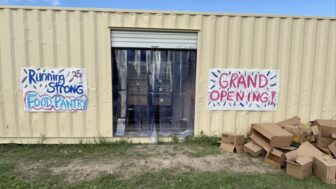
Other accomplishments were the completion of student gardens, the grand opening of the nursery, the pruning/clipping of vertical plants, the grafting of apple trees and the cloning of lilac, cottonwood and apple trees.
The program is also expanding its growing methods to include deep water culture, self-watering pots, hydroponics and creating its own fertilizer, plant food and microbe solutions for replenishing soils.
In addition, hoop houses were irrigated and water lines were installed at all hoop houses and the nursery.
For 2026, Sydney stated, “We are anticipating another year of growth for the Pine Ridge gardening program.
“Participation in our gardening classes is growing each year!
“We anticipate up to 45 students joining us for our gardening classes.
“These students will learn hands-on gardening techniques from master gardeners and each student will receive their ‘Tools for Growth’ kit, consisting of crucial home gardening tools, and seeds or seedlings to start their home gardens. Oyate Ta Kola Ku provides use of larger equipment as needed!”
She also stated that for the coming year regarding greenhouses and garden harvest “with our all-year temperature-controlled greenhouse, four high tunnels, two open air gardens, and plant nursery (the first and only on Pine Ridge), we will see another high production year at Medicine Root Garden.
“We anticipate over 45,000 lbs. of fresh produce grown next year on site!”
In addition, “Our mobile market travels three times a week to rural, hard-to-reach places on Pine Ridge, making fresh produce and pantry items more accessible to families. Approximately 140 families receive this food each week. EBT is accepted.”
And we will continue with our Farmers Market at Oyate Ta Kola Ku three days a week from 9 a.m.-4:30 p.m. and two days a week from 9 a.m.-8 p.m.
Rose notes that the purpose of the garden program is to provide educational teachings about food self-sufficiency and feeding families.
She expects that in 2026, 105 participants or individuals from ages 5 to elderly from all nine districts of the reservation will be assisted through the garden program. She anticipates 50,000 pounds of produce to be harvested and distributed this year.
Slim Buttes Agricultural Development
Operating since the 1980s, the Slim Buttes Agricultural Development (SBAG) program tills gardens, distributes seeds, and teaches food preservation techniques, serving over 650 people on Pine Ridge annually.
In 2025, we also continued our long-term support of the SBAG program, tilling community gardens, distributing outdoor seedlings and seeds that yield indoor nutrition by the day, helping to meet the healthy and fresh food needs of families on the Pine Ridge Indian Reservation.
For more than 30 years, with Running Strong’s support, SBAG has been supporting family and community gardens on the Pine Ridge Indian Reservation through educational gardening radio segments, growing organic seedlings at the SBAG greenhouse, helping families prepare their gardens, donating raised beds and distributing seedlings.
In November, SBAG Field Director Milo Yellow Hair reported that the $9,847 grant from Running Strong was used to “ensure that Slim Buttes Agricultural Development Project’s objectives for good nutrition and wellness, both physically and spiritually, are met by families on the Pine Ridge reservation.
“The funding allows people the opportunity to plant and tend gardens at their homes, and installs planter boxes, raised beds, tills gardens and educates gardeners on how to create and maintain healthy soil, compost and food preservation.”
Milo reported in 2025 SBAG distributed 5,280 seedlings to families on Pine Ridge, built eight new planter boxes and ten new raised beds, refurbished 60 old planter boxes and raised beds, tractor tilled 42 and hand tilled 20 beds of 5′ x 10′ each.
In addition, SBAG distributed 800 pounds of produce grown in the SBAG garden to community members and to the Oglala meals program, serving an estimated 700 individuals.
“It has been a productive growing season and an abundant harvest here at Slim Buttes,” reported Milo. “The grasshoppers did eat some of the greenery, but it affected only about 10 percent of the produce grown here at SBAG.
And while on September 7, the region experienced an unexpected early frost on that killed many of the tomato plants that were in the ground outside.
However, the good news Milo reported was that “all the greenhouse tomatoes, and container tomatoes that were covered, survived and continued ripening on the vine.”
For 2026, Milo stated “We are looking forward to another successful match next spring to help us kick off the growing season.
“Federal budget cuts are impacting tribal food distribution programs, so support from Running Strong to our gardening program would be helpful.”
For 2026, “SBAG will impact more than 200 families by distributing 5,000 seedlings for home gardens,” says Sydney.
“These families will be given the tools to go out in their back yards and pick tomatoes right off the vine, dig in the soil for potatoes, carrots and onions, and harvest peppers, beans and more all summer long.”
Dreamstarter Garden Programs
2023 Dreamstarter Noah Proctor
In 2023, Dreamstarter Noah Proctor of the Piscataway Conoy Tribe embarked on a mission to bring fresh, locally grown produce to his tribal community. Noah, one of ten recipients of the 2023 Dreamstarter grant received $20,000 to make his dream into a reality. With the support of Running Strong and his mentor organization Through Piscataway Eyes, Noah’s vision blossomed into a community garden that provided substance for the body, and cultivated community.
Noah’s Dream was inspired by his passion for giving back to and supporting his community. Noah has always been an active member of his community, participating in many events to celebrate and bring awareness to his Tribe. Through his participation, Noah recognized that there is a struggle in getting his community to come together as they have no Reservation, dedicated land or community center to gather at. Additionally, 28% of his tribal members live at or below the poverty line, making it difficult for individuals and families to prioritize community involvement when their immediate focus is on meeting daily needs. A community garden offered the perfect solution, addressing the immediate needs of families while also creating a space for cultural connection and environmental justice for the Piscataway Conoy Tribe.
The garden was brought to life through careful planning, hard work, and the collaboration of volunteers. Over 1,000 square feet of space was provided by Through Piscataway Eyes for Noah to build his garden. In the beginning stages, fields were tilled, posts and fencing were installed, and soon enough, the garden was bursting with life.
The garden produced a bounty of tomatoes, peppers, and a traditional “Three Sisters” garden of corn, beans, and squash. The produce was distributed to tribal members, and even plants were able to be shared with elders and others to support home gardens. “Feedback from recipients confirmed that the garden produce provided a valuable supplement to their diets and helped address food insecurity.” The fresh produce became a source of inspiration for home-cooked meals, recipients made tomato pancakes, shish kebabs, healthy sandwiches, homemade chowder, and nutritious pasta dishes. Chief Jesse James Swann Jr. even fried green tomatoes for the hardworking volunteers.
Many shared that the garden not only helped address food insecurity but also brought a renewed sense of pride and connection to our ancestral practices. Noah shared that one of the greatest successes of the project has been the involvement of over 30 unique volunteers, mostly young people from the community, who assisted in preparing and planting the garden. Volunteers also gained valuable cultural and agricultural training, empowering them with knowledge on how to cultivate the land sustainably, and inspire younger generations to be involved in agricultural and environmental justice efforts within the tribe. “I think it made other people my age realize that they can be impactful,” Noah reflected, “even if they do not have wealth to support the community in a financial way.”
For Noah, “One of the most significant impacts of the Dreamstarter grant was the confidence it gave me to lead a project that was deeply meaningful.” Noah reflects that for him the project, “wasn’t just about growing vegetables; it was about nurturing a sense of unity and resilience within the tribe.”
Noah’s project is more than a garden—it’s a growing legacy of sustainability, self-sufficiency, and cultural connection. The Piscataway Conoy Tribe’s community garden project made a lasting impression in Noah’s community, with several meaningful outcomes that will continue to make an impact. Noah is already looking towards the future, reporting he is “confident that the skills and relationships formed during this time will continue to benefit the tribe as we move forward.” The garden will continue to produce healthy foods into the fall, and we are happy to report that the Piscataway Conoy Tribe plans to continue the garden into the new year.
2023 Dreamstarter Sara Powell
Sara Powell of the Navajo Nation developed her program with the Nebo School District in Spanish Fork, Utah.
Sara’s dream was to reconnect fellow Native American students with their traditions and encourage self-sufficiency through a summer gardening program.
During the pandemic, many of Sara’s classmates struggled to stay connected, and secure healthy food options due to school and work closures.
Through her partnership with the Nebo Title VI Indian Education Program, Sara hosted gardening classes and events throughout the summer that allowed Native youth to gather and learn how to cultivate their own gardens.
On the first day of her program more than 25 kids, from grades kindergarten through high school, gathered in Sara’s backyard to learn about planting.
Everyone participated in planting corn, squash, and beans and learned about the Three Sisters Garden.
In a few weeks the group returned to learn about proper watering techniques, and how to build a drip system to keep their plants thriving.
Sara also led short lessons on gardening and healthy habits to younger kids at their day camps throughout the summer, and hosted booths at community events and showcases. At each event she provided a seed planting activity that allowed students to take home seeds and seedlings for their own gardens.
Her Dreamstarter project, “Food Security with Three Sisters Garden”, was designed to encourage self-sufficiency and gardening skills served 425 Navajo, Goshute, Shoshone, Ute, Paiute, and other tribal participants during the grant period from June 5, 2023, to June 27, 2024.
“We spent funding on workshops and supplies for gardening, canning, drying, foraging, fishing, cooking and storing traditional / foods. We also held a weaving and drum making class for students,” Sara reported following the conclusion of her Dreamstarter project in August 2024.
“We invited special guests in for leadership and cultural workshops, and we held a motivational conference for high school students called Naataanii Day.
“We were able to buy snacks and healthy foods with this grant, which is a huge life-saver since our federal grant does not allow this, our after-school kids always come in tired and hungry.
“We integrated fun cultural classes that centered on healthy activities; mental wellness, nutrition and self-sufficiency, empowering self-identity and lots of support from Title VI staff and parent participation.”
Sara listed the major accomplishments of her Dreamstarter project:
1. This project taught students about healthy life choices for their physical, mental, emotional and spiritual well-being.
2. We invited presenters/speakers who looked like our students. Inspiring Native youth!
3. We focused on Native self-identity, teaching inter-tribal dance, music, arts (weaving, drum-making, rattles, tribal regalia etc.).
4. We were able to offer healthy snacks in our 3 after-school program sites, workshops and student conferences.
5. Running Strong supported Nebo Indian Education in buying supplies needed to keep going!
Sara noted that many families participating in the project rented their homes and didn’t have a place to grow a garden, so she encouraged them to start with a box garden “so that they could see that it doesn’t take a lot of space to grow things even just tomato, peppers and squash.
“The students were excited to watch their plants take root and produce food.”
She reported that some planted their plants in small areas and despite the size, the plants grew until they were ready to be harvested.
“Little kids enjoy watching things grow, with watering and weeding help, the plants thrived under their care.”
In addition, two of our 2025 Dreamstarters are focusing on gardening-related projects.
Gabrielle Pike, an active community member of the Ute Indian Tribe, has a dream, “Nah-Nây; To Grow,” to establish a traditional medicines garden on the Uintah & Ouray Reservation is located in northeastern Utah as pollution from the state’s largest oil field has decimated traditional plants and medicines on the reservation.
She also says she will be providing traditional medicines for community members facing imbalance.
And Karli Moore will be conducting gardening symposiums on the Lumbee Tribe of North Carolina food ways and consulting with elders on how to grow traditional foods.
Through the “Lumbee Food Collective” Karli’s project will help restore Lumbee farming heritage and its rich culinary contributions.