Dr. Cristin Haase, DMD, MPH, has always held a dream to one day visit an Indian Health Service (IHS) or tribally run clinic and see Native American physicians, dentists, and administration as the primary decision-makers and providers. More Native healthcare providers in Native communities would improve continuity of care, offer leadership role-models for the community, and theoretically reduce the disproportionately poor oral health and severe oral disease in Native communities.
In 2016, there were 135 American Indian/Alaska Native dentists in the U.S., and the rates of untreated oral decay in 35 to 44-year-olds were 64% and 54% in people aged 55 years and older.
It was also that year that Cristin received Running Strong’s Dreamstarter grant to launch the Pre-Dental Admission Workshop (PAW) at A.T. Still University’s Arizona School of Dentistry and Oral Health, a program to help Native high school and pre-dental undergraduate students overcome institutional barriers to getting into dental school. She was a second-year dental student and had a vision to increase Native representation in dental professions as a means of improving oral health and overall wellbeing of Native people.
There are many barriers for Native students who wish to enter healthcare. One of the biggest barriers is the grueling and financially costly application process to get into medical and dental programs, a challenge she believed could be surmountable with mentorship from Native dental students who had been through the process.
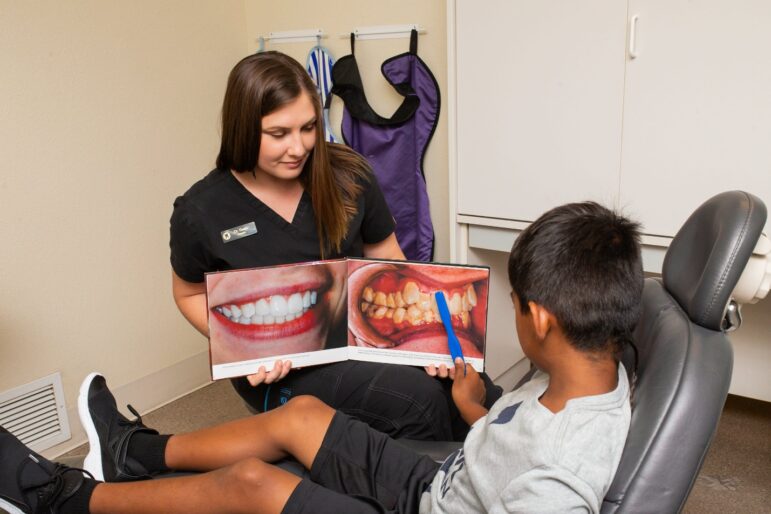
During her first 3-day workshop, she mentored 10 young aspiring Native dentists in the process of applying to dental school, including giving information on how to prepare for the Dental Admission Test, hands-on simulations of dental procedures, mock admissions interviews, and shadowing dentists.
In the first year of her program, 5 of the 10 Pre-Dental Admission Workshop participants were admitted into dental schools across the country.
“This project could have an immense effect on American Indian communities. In the short term, attendees will be more prepared for the dental school application process and dental school itself. They will be able to navigate the application process, have knowledge and understanding of how to strengthen their applications, and come away with the foundation of a professional network, which they will be equipped with skills to expand. Long term, we are working toward improving oral health and overall wellbeing for American Indians and Alaska Natives by increasing the number of AI/AN dentists.”
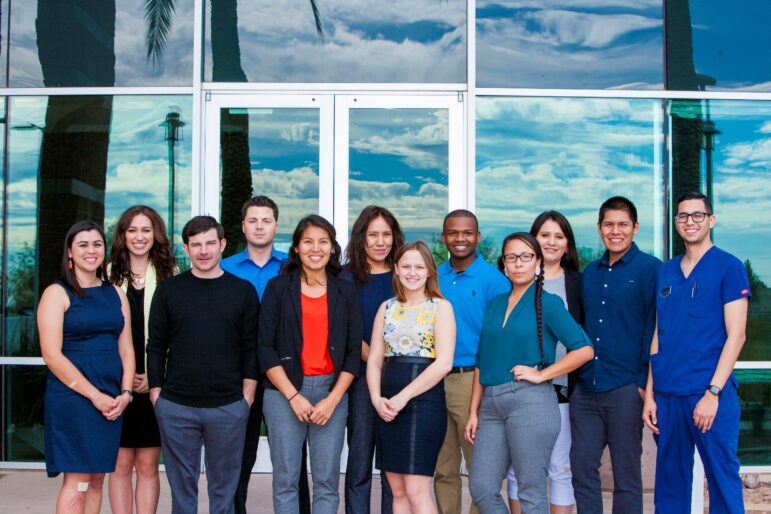
Data shows that increasing representation of Native American dental professionals and developing a culturally responsive dental workforce is crucial to reducing Native American oral health inequities. One study concluded that “highly personalized intervention approaches needed to be developed that could be shaped by cultural perspectives attentive to social determinants of health. Parents often did not attend the oral health sessions due to living mostly in remote areas, having very low incomes, and facing additional challenges, such as lack of transportation. When parents were more engaged, study results showed better oral health outcomes for their children.”
There is no better person to address the needs of a tribal community than a member of that community.
From 2016 to 2020, Cristin received Running Strong support to operate the PAW Workshop every year at A.T. Still University, mentoring a total of 45 Native students through the dental school application process.
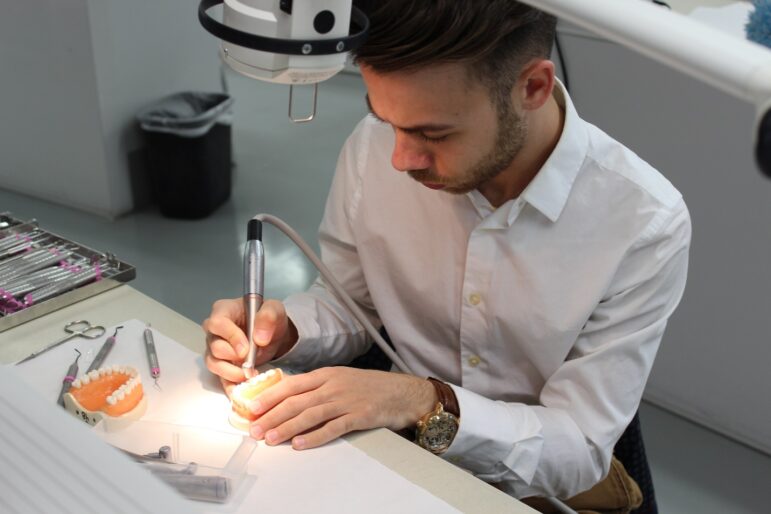
One of those students was Joshua “Teague” Rutherford.
“I attended the second Pre-Dental Admission Workshop (PAW) for American Indians and Alaska Natives in January 2017. Now nearly 2 years later, I am a first-year dental student (DI) at ASDOH. Coming from Fort Belknap Indian Reservation in Northern Montana, I never fully imagined myself this close to a doctoral degree. One of the biggest reasons why I am at ASDOH chasing a DMD/MPH while being involved with improving American Indian health and lifestyle is, in large part, due to the work of Dr. Cristin Haase and her startup of PAW. This is why PAW is so important to me because while growing up and attending undergrad in Montana, I felt like I was alone in this journey. I did not know an AI dentist until meeting Dr. George Blue Spruce at the second PAW, where I found out he was the first dentist to work on my reservation. He even performed clinical dentistry on my great-grandma. In my opinion, this workshop is one of a kind for the American Indian healthcare world. Oral health is severely poor amongst most tribal nations, and PAW is a step in the direction of improving this area. PAW is a unique program that helps bring the next generation of American Indians who have an interest in the health field, specifically dentistry. It allows the youth to make connections with each other, and it allows us who are in the field, doing our best, to help them and increase the number of AI dentists in the workforce. Since attending PAW 2 years ago, I have become a member of the Society of American Indian Dentists (SAID), received a BS in Biology, accepted into and enrolled in dental school, and a leader in improving American Indians in the health workforce to tackle health disparities. I am the prime example of why PAW is something special and important to continue maintaining and developing in the future.”
Mariah John (Navajo), 26, was another.
“As a young American Indian, we have very few resources and advisors that guide us through school. This workshop enlightened and provided me with the tools I need to attend dental school. The PAW not only helped me understand those requirements for dental school, it motivated me to also support those behind me or before me to accomplish their goals. These resources may seem small, but this career path is tough, and every resource that will enhance success is crucial.”
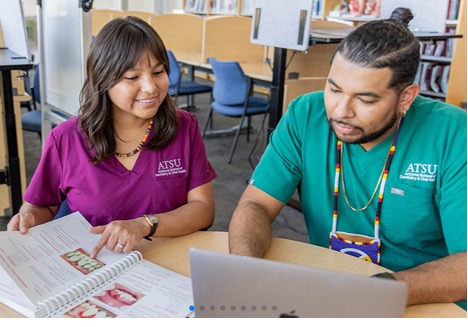
In 2020, Cristin received Running Strong’s Dreamstarter GOLD grant to continue to increase the number of American Indian and Alaska Native healthcare providers. Faculty and students from A.T. Still University of Health Sciences worked with and mentored Native youth interested in health professions to prepare them for the rigorous application processes for the professional degree programs, such as Doctor of Dental Medicine, Doctor of Osteopathic Medicine, Doctor of Physical Therapy, athletic training, and physician assistant programs.
This expansion saw an additional 45 Native students go through the health profession mentorship program over the course of 3 years, and the university has now absorbed it into their annual programming (https://www.atsu.edu/diversity/national-center-for-american-indian-health-professions).
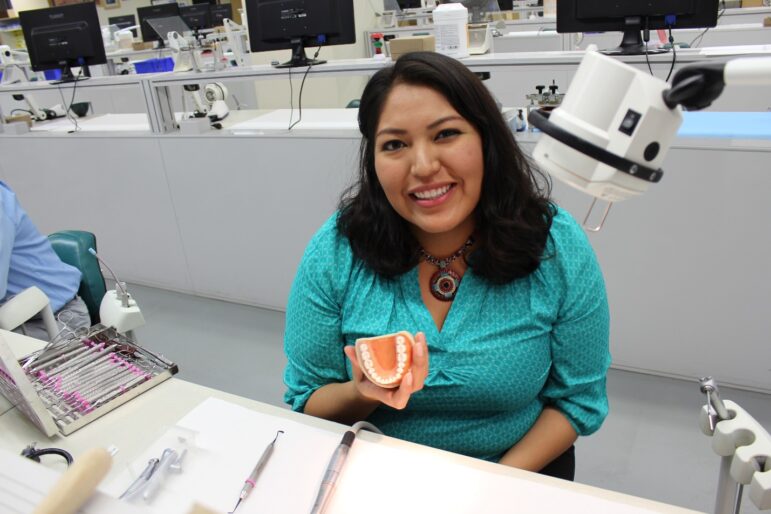
From 2021 to 2024, in addition to the Dreamstarter GOLD grant-funded Health Profession Mentorship workshops, Cristin continued to work with Native dental students through the Society of American Indian Dentists, an organization she worked with in college and now serves as the President. Through working with SAID, Cristin was able to expand from working regionally in the Southwest to nationally, allowing her to have a greater reach than at an individual school by working with multiple dental schools across the country and tapping into a large network of Native dentists. Running Strong’s support of SAID formalized their mentorship program for students, providing mentorship and peer support for Native dental students through the process of applying to dental school and through each year of the dental school program.
In those years, Cristin and SAID mentored 60 Native students, with 35 of those students either matriculating into or graduating from dental school.
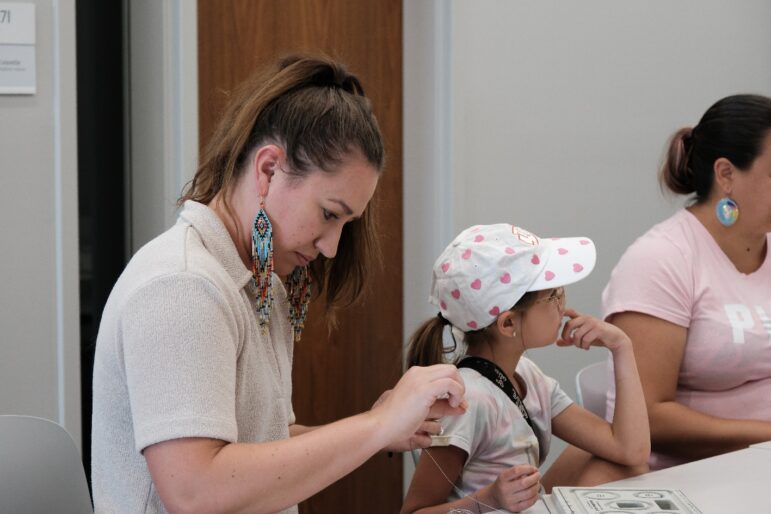
Additionally, Cristin has inspired two dental students to implement similar programs at their universities. One is Addison Glover, who started a Pre-Admission Workshop for Underrepresented Pre-Dental Students at the University of Tennessee Health Science Center (https://news.uthsc.edu/dentistry-student-helps-mentor-underrepresented-pre-dental-students/). The other is Dr. Lindsey Montileaux Mabbutt, DMD, MPH (Oglala Lakota), who attended Cristin’s pre-admissions workshop at A.T. Still University and who, in 2020, applied for her own Running Strong Dreamstarter grant. She was the only Native student at the University of Washington School of Dentistry, and had a dream to mentor and encourage Native high school students in Washington State to explore careers in dentistry and medicine. With multi-year funding from Running Strong, Lindsey had 33 Native students participate in her program and develop passions for helping their communities.
“The impact is not direct, but I believe we will see monumental impacts in the future. I think we will see more American Indian dentists, but also, I think we will see many of the PAW participants take on meaningful roles as leaders in their communities in the coming years. Throughout my childhood, I grew up witnessing my grandparents and family members experiencing health disparities. I was aware of their health issues, but I noticed that dental health was never really a worry or as important. Until my grandmother had severe dental pain due to tooth decay that never got treated. For the first time, we went to the dental department in the hospital, my grandmother only spoke Navajo, so I had to translate for her. I told the dentist about her pain, and the first thing the dentist asked, “Does your grandmother have insurance?” I was just a young kid, so I had no idea what insurance was. I asked my grandmother, and she answered that she does not have insurance, so I told the dentist, and he turned my grandmother away. We went back home, and I couldn’t bear to watch my grandmother continue to just sit there in pain, but there was nothing I could do. I held a warm cloth by her jaw and continued to comfort her. After this incident, I knew instantly that I wanted to become a dentist, or anything related to the dental field, to help my people.” — Jessica Tapaha (Navajo), 2018 PAW Attendee
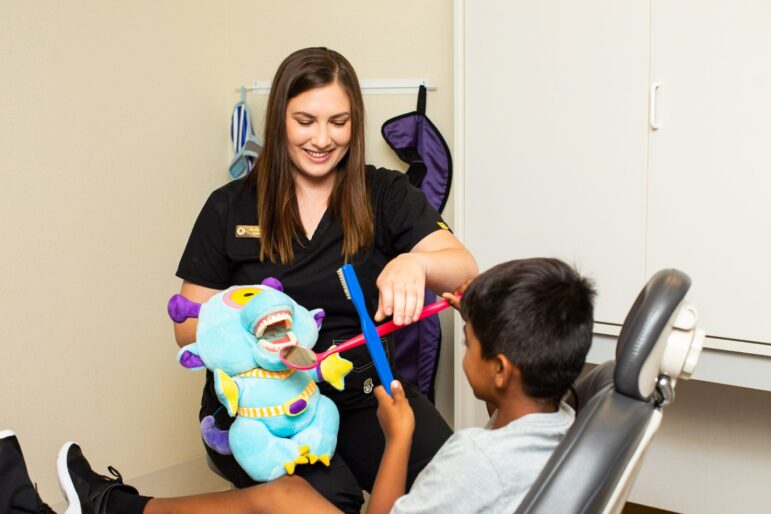
A 5-year-old Indigenous boy from the Northern Plains was suffering immensely from tooth pain. His single mother was unable to take time off work, needing to provide food and shelter for him and his siblings. One day, he showed up to the tribal health dental clinic with swelling in his face and a mouth full of cavities. The provider there had given the patient antibiotics and referred the child to an outside provider that was three hours away. The mother had a hopeless look in her eyes, knowing that she did not have the resources or the time to get her child to this dental appointment. After all, this was his third round of antibiotics, and she couldn’t make the last referral. But there was a new dentist at the clinic. This new dentist was Native, and she knew how the system could make anything feel impossible. She took action to treat the child in-house because she cared. She wasn’t afraid that extracting an infected tooth from a 5-year-old would be a difficult procedure because she knew that he and his mother truly had no other option. This is the story one of our recent graduates shared with me during her first month on the job as a practicing dentist. Danielle Silbernagel attended the very first Pre-Dental Admissions Workshop in 2016 and is now a dentist. The PAW not only impacts the individuals that become dentists but changes the mindset of care within entire tribal communities. This child was able to get access to the care he needed, because a provider, a Native dentist, understood the struggles of navigating our healthcare system. Truly, it may have saved his life. The ability of Native American providers to relate and troubleshoot issues pertaining to care is exactly why we need more Native dentists, and all the other health professions too.” – Dr. Cristin Haase, DMD, MPH
In 2016, there were 135 American Indian/Alaska Native dentists in the U.S., and the rates of untreated oral decay in 35 to 44-year-olds were 64% and 54% in people aged 55 years and older.
In 2022, after 8 years of Cristin growing her network of Native dentists and mentoring Native dental students into and through dental school, there were 400 American Indian/Alaska Native dentists in the U.S., and the rates of untreated oral decay in 35 to 44-year-olds were 57% and 45% in people aged 55 years and older.
It is not a coincidence that with the prevalence of Native practitioners, the oral health equity gap decreases. Cristin’s dream, with Running Strong standing behind her, is changing the course of Native communities across the nation.