Rooted in Sovereignty: The Medicine Root Garden Program
Running Strong for American Indian Youth® partners with Native communities to grow, access, and distribute fresh, nutritional, and traditional foods through community gardens, mobile and farmers markets, and local food distribution programs that strengthen food sovereignty and self-sufficiency.
For over a decade, these partnerships have reshaped local food systems in tribal communities. They have restored traditional agricultural practices, built infrastructure, and equipped Native people to feed their families and their nations on the Pine Ridge Indian Reservation in South Dakota and beyond.
In Nevada, Running Strong supports the Walker River Paiute Tribe as it revives its community garden and orchard, employing tribal members, installing a drip irrigation system, and supplying the food pantry with fresh produce.
On the Crow Nation in Montana, Running Strong supports partnerships like Apsáalooke Immíio, founded by 2016 Dreamstarter JoRee LaFrance, which advances food sovereignty and workforce development through local gardening and traditional food practices.
At the heart of this work is Running Strong’s cornerstone food sovereignty initiative, the Medicine Root Garden Program, operated by the Oyate Ta Kola Ku Community Center and its director, Rose Fraser, on Pine Ridge. The program brings together education, economic opportunity, and community health.
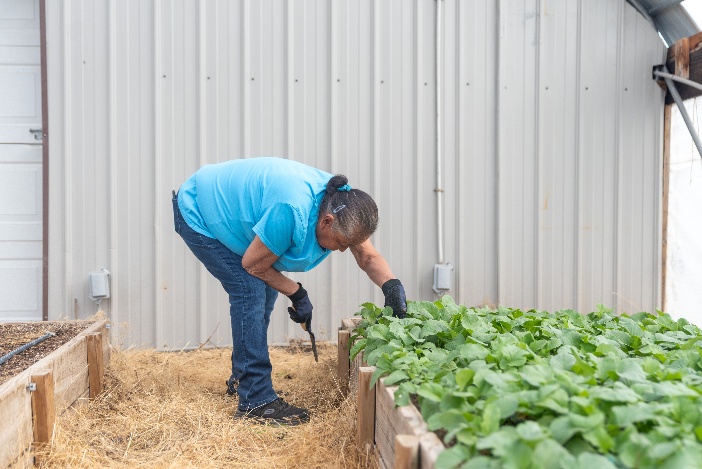
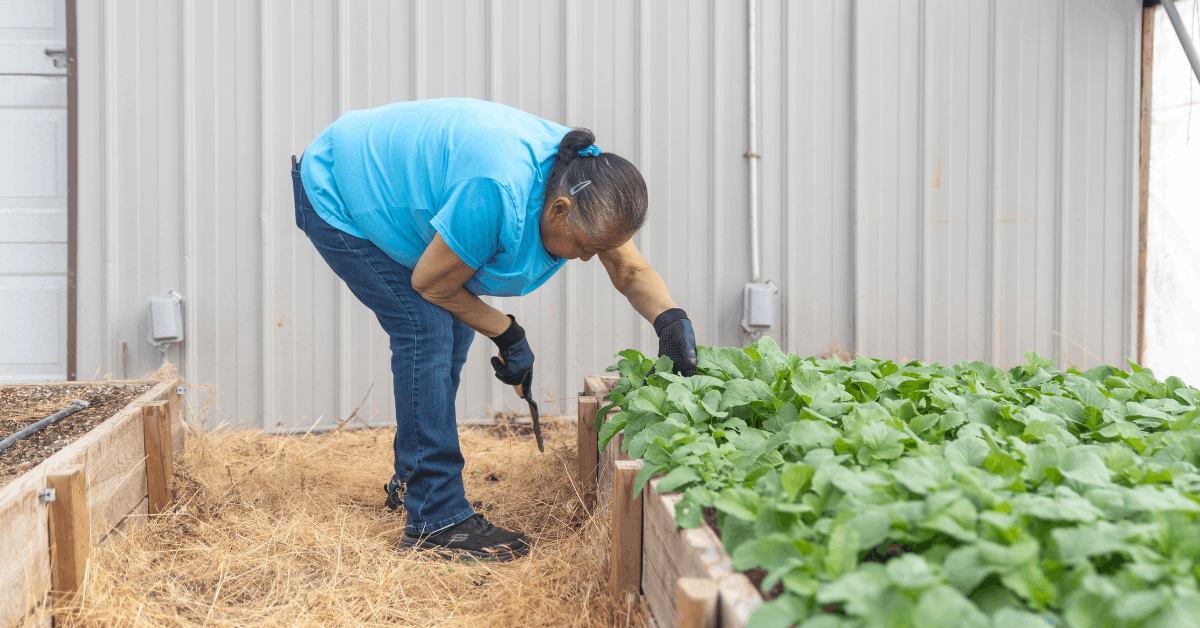
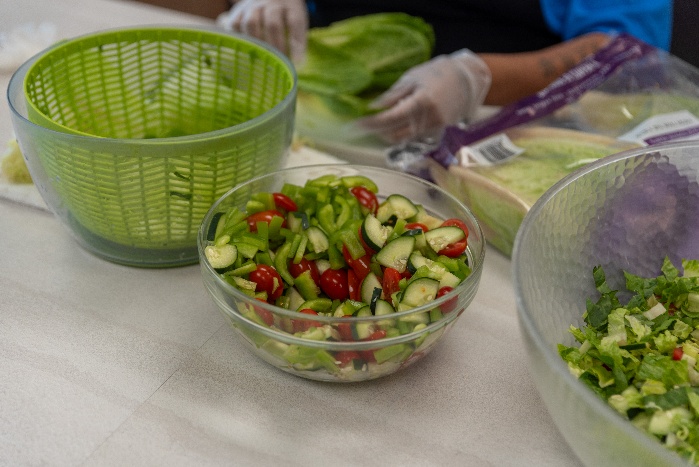
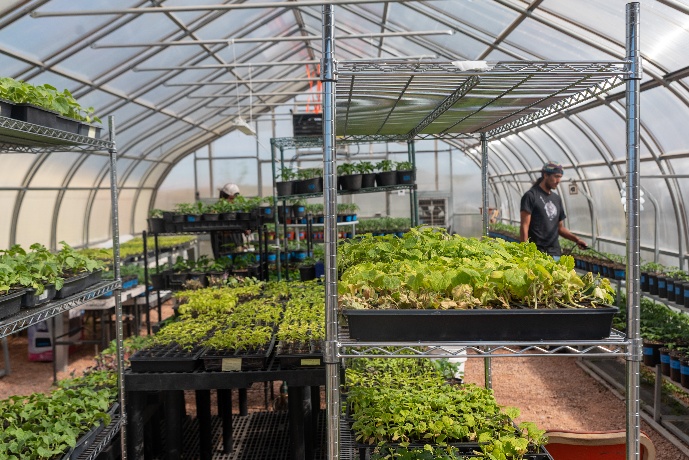
Through Medicine Root, families learn to grow, harvest, prepare, and preserve their own food, with in-classroom training, hands-on workshops, and home garden starter kits. Each year, between 90 and 120 gardeners move through beginner, intermediate, and advanced classes, and between 25,000 and 40,000 pounds of fresh produce are grown across the Medicine Root Garden’s own hoop houses, greenhouses, and gardens — nourishing local families and supplying local markets.
Graduates can sell surplus produce to the community through our affordable, EBT-accessible Farmer’s and Mobile markets, building small-scale income streams of their own. Demonstration gardens and greenhouses double as living classrooms for sustainable growing methods, and the mobile and farmers’ markets carry fresh produce to households far from the nearest grocery store.
A Year of Growth on Pine Ridge
Running Strong executive director Sydney Mills Farhang reports that in 2025, Running Strong continued to provide foundational support for the Medicine Root Garden Program — a nine-month course that teaches community members to grow, harvest, prepare, and eat fresh produce on Pine Ridge. We supplied the hands-on instruction along with the tools, seedlings, and fencing to plant 95 student gardens.
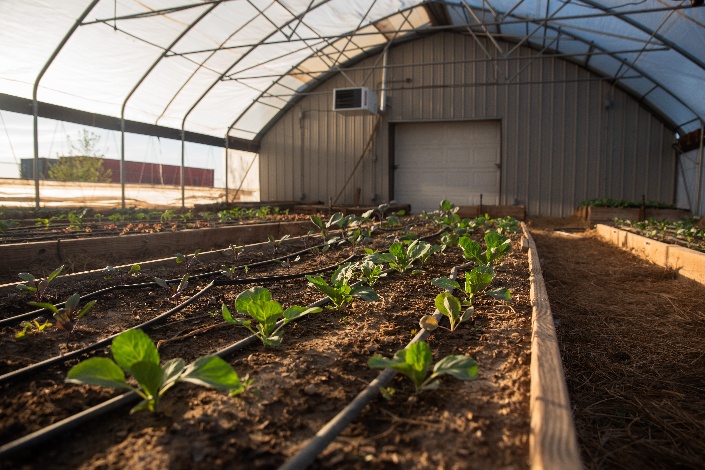
Alongside the student gardens, we operate our own extensive demonstration gardens and greenhouses at the Oyate Teca Community Center. Each growing area demonstrates a different method, so students can learn a technique in the classroom and then see it firsthand.
In 2025, Oyate Teca’s gardeners grew 25,000 pounds of fresh produce — sold at local farmers’ markets, shared as gifts, canned or preserved, and composted. Sales of homegrown produce brought needed income to gardeners and raised the quality of food available across the community.
Medicine Root also continued to run its Mobile Market. Equipped with a generator, refrigeration, shelving, and air conditioning, the Mobile Market travels three days a week to harder-to-reach parts of the reservation — stopping at three locations and covering nearly 100 miles to reach residents. It carries produce from the summer harvest and the surplus grown by community gardeners moving through the classes.
The Pine Ridge Reservation covers a vast area, and the nearest full-service grocery store sits nearly 80 miles away, off the reservation in Rapid City. That distance makes reliable access to fresh produce a real barrier. Additionally, when fresh food is imported for sale on the reservation, it loses nutritional value and the price increases double, sometimes triple, what it costs elsewhere.
Growing Fresh Local Food
Oyate Ta Kola Ku director Rose Fraser reports that last year, 95 individuals took part in or were served by Medicine Root garden programs. They ranged in age from 5 years old to elders and came from all nine districts on the reservation.
Classes were offered at three levels: beginner, intermediate, and advanced. The year’s milestones included completing the student gardens, the grand opening of the nursery, pruning and clipping vertical plants, grafting apple trees, and cloning lilac, cottonwood, and apple trees.
The program is also expanding its methods to include deep water culture, self-watering pots, hydroponics, and its own fertilizer, plant food, and microbe solutions for replenishing soil. Water lines were installed and irrigation added at all hoop houses and the nursery.
Looking Ahead
For the year ahead, Sydney sees momentum building. “We are anticipating another year of growth for the Pine Ridge gardening program,” she said. “Participation in the gardening classes is growing each year! We anticipate up to 45 students joining us for gardening classes. These students will learn hands-on gardening techniques from Master gardeners, and each student will receive their ‘Tools for Growth’ kit, consisting of crucial home gardening tools and seeds or seedlings to start their home gardens. Oyate Ta Kola Ku provides use of larger equipment as needed!”
On greenhouses and harvest, she added: “With our all-year temperature-controlled greenhouse, four high tunnels, two open air gardens, and plant nursery (the first and only on Pine Ridge), we will see another high production year at Medicine Root Garden. We anticipate over 45,000 lbs. of fresh produce grown next year on site!”
The Mobile Market will keep expanding access, too. “Our mobile market travels three times a week to rural, hard-to-reach places on Pine Ridge, making fresh produce and pantry items more accessible to families. Approximately 140 families receive this food each week. EBT is accepted,” Rose Fraser said. “Finally, we have some exciting news: we are evolving our Farmer’s Market into a Food Co-op, offering affordable fresh produce and preserved goods to the community through a grocery store supplied by local producers!”
Feeding Families, Growing Skills
Rose describes the purpose of the garden program simply: to teach food self-sufficiency and the skills to feed a family.
Through the classes, Rose explained, “students will learn the six laws of planting, seeding, how to care for their plants, irrigation, how to become seasonal entrepreneurs, how to harvest their crops, and how to create value-added products from their harvest.”
Families who complete the classes receive incentives. Advanced students go further: learning about chickens, bees, regenerative farming, branding their products, cloning plants and trees, grafting tomatoes, and more.
The impact, Rose said, runs deeper than the harvest. Participants are “becoming self-sufficient by growing their own food, learning about the health benefits of growing your own food, learning about our traditional foods, and how to prepare and preserve them.
“Beyond individual growth, these activities also bring the community together, offering a safe, welcoming, and fun environment where people of all ages can connect and learn from one another. They create meaningful opportunities for participants to share their new skills and knowledge, with some even using what they’ve learned to earn a seasonal income or learn more cultural instruction.
“In all, these programs foster resilience, belonging, economic empowerment, and cultural vitality, helping our community thrive across generations.”
Food Sovereignty for Future Generations
In 2026, Running Strong and Oyate Ta Kola Ku embark on a new initiative to bring affordable, natural foods to the Pine Ridge Indian Reservation: a food cooperative that sells affordable, all-produce and goods supplied by local growers and producers.
We recently held our first community meeting regarding the food co-op, receiving early critical feedback about food access and quality on the reservation. 44% of community meeting participants reported “Always” having to leave the reservation to buy the groceries needed for their families, and 81% reported that “Always” having access to local, fresh food would make it easier to manage health issues in their families.
We are working with the community in Kyle, South Dakota, to improve access to fresh, clean, local, and affordable food to ensure the future generations of Native leaders are growing up with the fuel they need to thrive!
Subscribe to the newsletter to receive updates on the progress of our new Lakota Food Co-op!