Smile Strong/Feminine Hygiene Program Overview
Sadly, throughout Indian Country, basic needs items such as toothbrushes, toothpaste, and dental floss, along with feminine hygiene products, are unaffordable for too many Native American families and women when rent and utility bills are due, and food must be put on the table.
However, over the past forty years, Running Strong for American Indian Youth® has worked to transform health and wellness across tribal communities by blending practical aid with deep cultural empowerment. Its impact can be understood through three major lenses: foundational health access, youth-driven wellness leadership, and community-based healing initiatives.
Running Strong works to ensure Native families have essential health supplies – a cornerstone of wellness and dignity.
Update From Last Year
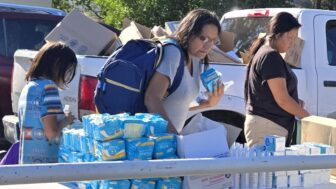
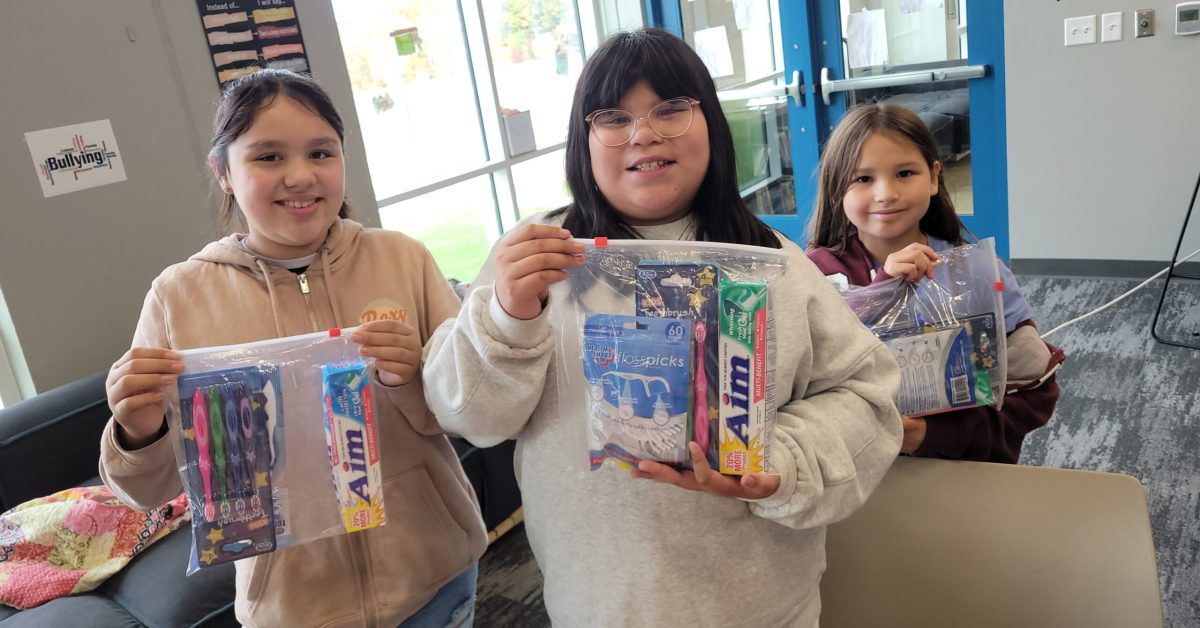
In 2025, Running Strong distributed thousands of critical in-kind goods across 40 program partners in 15 states, including 6,000 dental kits and 3,228 feminine hygiene kits.
Among those partners receiving dental kits and feminine hygiene products last year were:
The Bebela Project
In 2025, The Bebela Project, which promotes and nurtures mom and bebela by providing education, support, and resources in Eagle Butte, South Dakota, requested 300 dental and 200 feminine hygiene kits.
“We work mainly with moms with new babies, and these items are super important to them in this time,” said Director Laura Rose in her application. “A lot of our moms don’t have jobs so receiving these items is the way they get them.
“Mainly these items will go out to our moms who come through The Bebela Project and their families. But if someone else needs them, they will also receive them as well.”
In November, Laura reported that she had distributed 300 dental kits and 150 feminine hygiene kits.
“The items we received were very nice, and all our people really appreciated them.
“Though some may view these as simple items, people need these items for taking care of themselves.
“Many of our people don’t have the funds to be able to just buy these items.
“These items should be free to begin with, but unfortunately, they are not.
“This is a health care aspect just like going in for a checkup.
“Women don’t have a choice when they get their period, and so they should have access to these necessary items.”
Bowler School District
In 2025, the Bowler School District, which is made up of students from a very rural area in north central Wisconsin that has limited economic means, requested 300 dental and 100 feminine hygiene kits.
“Any donations received go a long way to helping out the students in the district to ensure they have the proper dental and hygiene products they need as growing individuals,” stated Title VI Coordinator Donald King.
“All donated items will go to the students in need, with the Native students getting priority when they are distributed.
“The kits will be distributed throughout the school, to students in need first, then distributed to students on an as needed basis, with some being stored in ‘Bree’s Closet’, which is a room in the school that has clothes, personal care items, and other items for students and family members that they can get when there is a need.”
In October, Donald reported that he distributed 300 dental and 100 feminine hygiene kits.
“Many families were very appreciative of receiving the dental and hygiene items,” he told us.
“I was able to start distributing them during the school open house in August, which worked out well.
“With the school district located in a rural community with few means, any donations to help the students and their families are a big help, especially in today’s uncertain times.
“Families are very grateful for any items that are available to help with their families.
“One family was very grateful for the dental kits to help encourage their students to get better at brushing their teeth.”
San Pasqual Band of Mission Indians
In 2025, the San Pasqual Band of Mission Indians, located in Valley Center, California, requested 300 dental and 200 feminine hygiene kits.
“The tribe has a school on the reservation and many youth that need supplies like these, as well as older people,” stated Housing Director Lisa Starr.
“Many residents that are on the reservation are in poverty level of living and cannot afford too many things, such as the feminine hygiene products.”
In October, she reported that she had distributed 300 dental kits and 150 feminine hygiene kits.
“The success was huge since something like that had never been done before,” she told us. “Many were very grateful since these things do cost money, and some families cannot afford it.
“Many cannot afford things, whether one may think that it is cheap or something basic. What may be basic for some is very difficult to get.
“It is amazing how the adult toothbrushes and the ones for the younger ones were combined so that they do not have to buy separate ones.”
Nebo Title VI Indian Education
In 2025, the Nebo School District Title VI Indian Education program, which covers 50 schools within the district located in Spanish Fork, Utah, requested 200 dental and 200 feminine hygiene kits. The program offers support services including academic support through homework labs, scholarship and cultural workshops, summer school program, and advocacy for Native American families.
“We are located in an urban setting with the closest reservation about 2-3 hours away,” stated Program Manager Eileen Quintana. “Our Native students make up less than 1 percent of the district student population.
“Almost half of our students fall within the free and reduced lunch category, so the need is high.
“We live in a close-knit community that tends to have lots of children.
“We are blessed to have many of our families with babies, they bring so much joy and light to our Indian Education family.
“We identify the families that have the most need and reach out to them personally, so that they know Running Strong In-kind supplies will be coming to our area, and then start distributing out to them first, then reach out to the broader community.
“If we have surplus, we always share these items with the nearby Title VI programs and Confederated Tribe of Goshutes.”
In September, Nebo Title VI Indian Education staff member Natalie Billie reported that the program distributed 200 dental and 150 feminine hygiene kits.
“The joy on the families’ faces when they receive their in-kind donations is truly heartwarming,” said Natalie.
“This year was no exception; the smiles of the students radiated success and gratitude.
“Each donation makes a meaningful difference, bringing hope and happiness to those in need.
“Many families in our communities are facing financial challenges, and providing hygiene kits can offer them much-needed support.
“Given the rising costs of everyday items, these kits can make a significant difference in helping families maintain their well-being.
“Every year, I witness the challenges that families face, and it truly touches my heart.
“When we’re able to offer even a small amount of support with supplies, it brings me so much joy to see the difference it makes in their lives.”
Dry Creek Rancheria Band of Pomo Indians
In 2025, the Dry Creek Rancheria Band of Pomo Indians, located in Santa Rosa, California, requested 150 dental and 50 feminine hygiene kits for its Tribal Wraparound program, a community-based, client-centered and strengths-focused program that works under Dry Creek Rancheria’s Housing Department.
“Tribal Wraparound serves American Indians in California experiencing or at risk of experiencing homelessness,” explained Wraparound Program Manager Kelsey Stuhr.
“Tribal Wraparound works with Transitional Age Youth, pregnant women and families, and individual adults to create an individualized plan of care that emphasizes a person’s vision and creates strategies to create safety and stability in their lives.
“We work with individuals and families who are experiencing or at risk of homelessness.
“This would be immensely helpful to give out to these individuals, as they are often expensive to get, and the folks we work with do not have funds for basic needs.
“We can also use this for the folks we work with when they get recently housed to lower the cost of moving and ensure basic needs are met.”
In 2025, the Dry Creek Rancheria Band of Pomo Indians distributed 200 dental kits and 50 feminine hygiene kits to members of its community.
“We were able to give all people enrolled in wraparound a hygiene kit,” Kelsey reported.
“All of the people who received kits were homeless or at risk of becoming homeless, and have few resources to purchased needed supplies.
“The kits were essential in ensuring basic needs were met.
“We were able to give the dental kits to a young family who had just recently moved into housing after living in shelters for a year.
“They had struggled to teach their kids to brush their teeth, and the kits, especially timers, were very helpful in teaching the importance of dental hygiene.
“From our staff, it is wonderful to be able to give out essential items for people to get their needs met.
“People shouldn’t have to worry if they can afford to care for their teeth.”
Goals For This Year
For 2026, our goals are to raise $21,000 to distribute 3,000 dental kits again this year, as well as to raise $65,850 to distribute 3,000 feminine hygiene kits that include pads, tampons, wipes, hand sanitizer, and more.
“Oral healthcare remains an important area for Running Strong,” states Running Strong Executive Director Sydney Mills Farhang. “Feminine hygiene products continue to be difficult to access in rural parts of the country.”