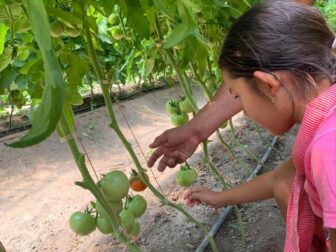
Right now on the Pine Ridge Indian Reservation, on the Great Plains of South Dakota, some 200 families are beginning to enjoy fresh produce grown in their own backyards — tomatoes off the vine, potatoes, carrots and onions dug from the soil, and peppers, beans and squash harvested all summer long. It is all made possible by the work of the Slim Buttes Agricultural Development Program (SBAG) and the generosity of Running Strong supporters, who have stood in this program’s corner for more than 40 years.
Getting seeds in the ground
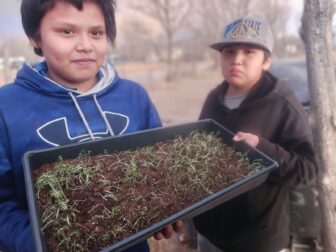
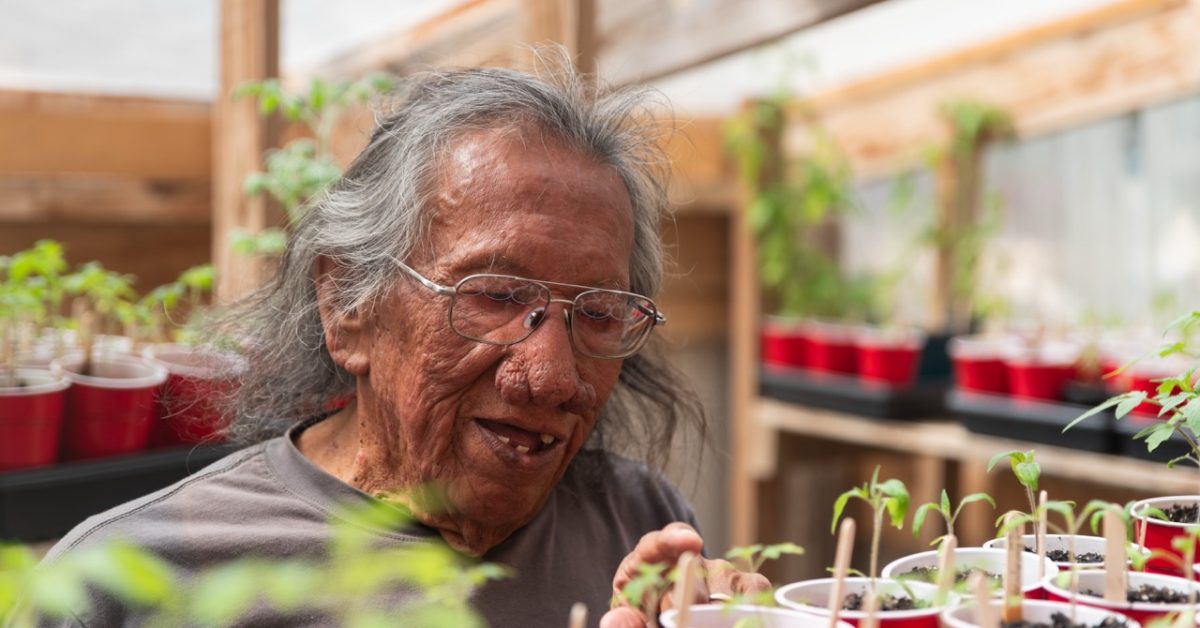
The season began, as it always does, in the SBAG greenhouse. Field director Milo Yellow Hair and his team filled 150 trays with roughly 4,800 seedlings — including 28 varieties of tomatoes and 14 kinds of hot and sweet peppers, from familiar Roma, Brandywine and Jalapeño to exotic heirlooms shared by organic gardeners in Europe. Root crops like potatoes, onions, garlic, beets, carrots and turnips went in through the spring.
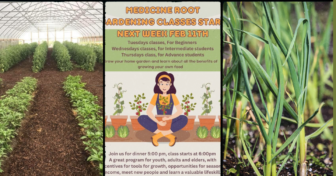
Out in the communities, the crew rented a tractor and tiller and prepared gardens across Slim Buttes, Oglala, Calico, Number Four, Drywood, Pine Ridge, Manderson, Wounded Knee and Porcupine. In all, they tilled 37 gardens, refurbished 42 existing beds and boxes, and built 22 new raised beds — including four custom planter boxes built to the exact specifications of Joan Tall, who uses a wheelchair and asked whether she could have beds she could reach. When they were installed, she told the crew, “That’s looking good — I knew you guys would take care of me.”
By late May, SBAG had distributed 50 pounds of seed potatoes, onions, 4,520 seedlings, and 60 packets of corn, beans, squash, watermelon, pumpkin and sunflower seeds — helping 200 families start growing their own food.
The Three Sisters and lessons that outlast the harvest
Among the seedlings SBAG shares are corn, beans and squash — the “Three Sisters,” grown side by side so the tall corn gives the beans a pole to climb, the beans feed nitrogen into the soil, and the squash spreads low to hold moisture and keep down weeds. It is agriculture rooted in relationship, teaching cooperation, balance and reciprocity — values deeply embedded in Lakota culture.
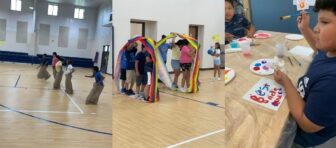
SBAG’s priority, Milo says, is “elders who are taking care of their grandchildren,” providing them with seeds and seedlings for a wide variety of vegetables and fruit. And it works hard to plant a lifelong love of gardening early. Pumpkins and watermelons, he notes, “are a big hit for the kids. When they all come here they always pick out the biggest one that they can carry.”
On the airwaves
From March 2 through May 18, Milo produced and hosted 12 episodes of “Wojub Oyanke — Talk About Food” on KILI Radio, the Voice of the Lakota Nation, broadcast from atop Porcupine Butte. The first half of each show is in Lakota and the second in English, and listeners keep asking for more of the language — younger people wanting to learn from a Native speaker, elders simply longing to hear it. The show sparks a steady stream of calls about gardening, including, this year, one from a listener all the way in Germany.
A season of weather extremes
This year has tested everyone. A late spring frost killed many early blooms and some gardeners’ first plantings, but SBAG was able to replenish those lost seedlings, and by June 1 most gardens were in the ground.
Then, on June 2, a slow-moving storm dropped six to seven inches of rain and ping-pong-sized hail across the western reservation in a single afternoon. Roads washed out, basements flooded, and many gardens in Oglala were destroyed. The greenhouse at Slim Buttes held, but drought and 100-degree heat have since returned, along with new sightings of grasshoppers. The experience has SBAG looking hard at the future — leaning further into greenhouses and raised beds as a more reliable way to guarantee food in a changing climate, while holding to its core formula of education, raising seedlings, and building beds.
Wopila Tanka — a big thank you
Asked why he has carried on this work for so many years, Milo speaks of a sense of satisfaction — and of what it means for families to know that “somebody, somewhere down the line, cared enough about us to send us some assistance and help to carry this on.” To the supporters of Running Strong, he offers simple gratitude: “There’s a lot of people who have stood in our corner for a long, long time.”