
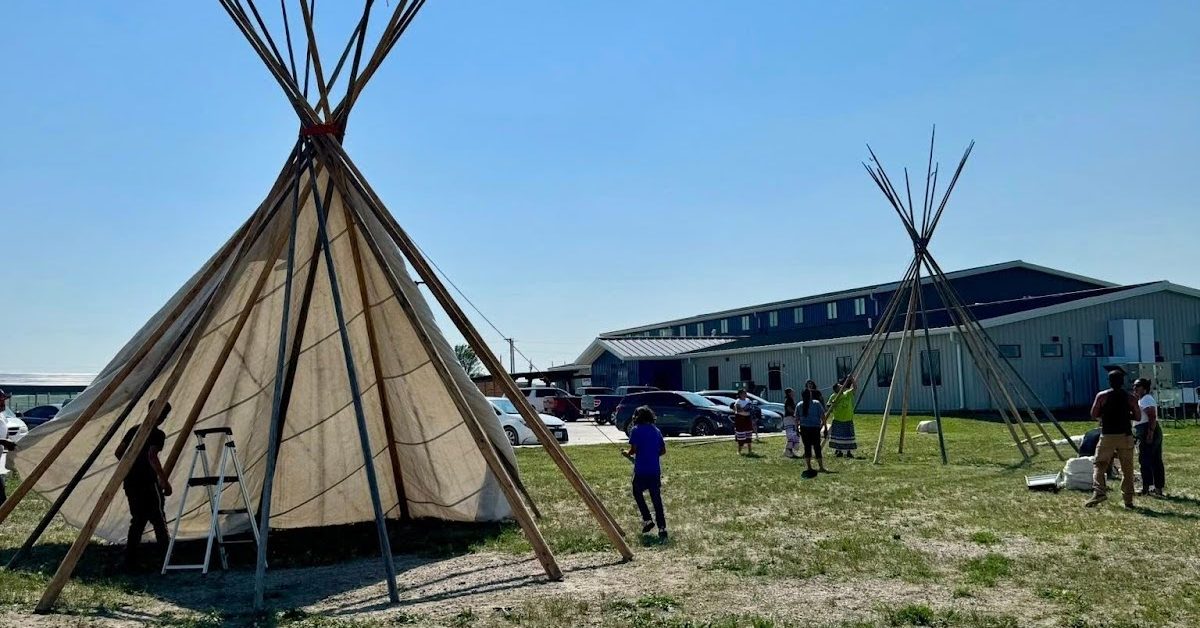
The Pine Ridge Indian Reservation, home to the Oglala Lakota Nation, is one of the largest reservations in the United States. Located in southwestern South Dakota, it spans more than 2.1 million acres of land, making it not only vast in size but also deeply significant in cultural and historical importance.
Statistics and news stories about Pine Ridge often highlight the struggles and hardships experienced by those who live there, missing much of the deeper truth and community context of Pine Ridge. It carries a profound history shaped by struggle and survival, a present marked by resilience and community strength, and a future driven by innovation and hope.
This resource offers a journey through that story. We will explore the history of the Pine Ridge Indian Reservation, examine the challenges faced by its people today, and, most importantly, highlight the empowering solutions being created by and for the Oglala Lakota people. From cultural revitalization to youth leadership and community programs, Pine Ridge is not defined solely by its struggles but by the strength and vision of its people.
Where Is the Pine Ridge Indian Reservation?
The Pine Ridge Indian Reservation is located in southwestern South Dakota, with a small portion extending into Nebraska. It is one of the largest reservations in the United States, covering approximately 2.1 million acres, or about 3,500 square miles. To put that in perspective, the reservation is larger than Delaware and Rhode Island combined, comparable in size to Puerto Rico, and nearly as large as the entire state of Connecticut.
The landscape itself is diverse and striking. Rolling prairies stretch across much of the reservation, while portions of the iconic Badlands cut through its northern edge, creating dramatic rock formations and cliffs. To the west lie the Black Hills, part of the traditional and ancestral homelands of the Oglala Lakota, adding to the deep cultural significance of the region.
Can people visit the Pine Ridge Reservation?
Yes, visitors are welcome at the Pine Ridge Indian Reservation. Those who come should approach with respect, recognizing that they are guests in a sovereign nation. Supporting local artisans, small businesses, and cultural centers is one of the best ways to honor the community while also gaining a deeper understanding of its traditions and resilience.
At the same time, it is important to be mindful of sacred sites. The Wounded Knee memorial, for example, is a place of mourning and reflection, central to both Lakota history and American history. Visitors are asked to treat such spaces with care, dignity, and reverence.
The People of Pine Ridge: The Oglala Lakota Nation
The Pine Ridge Indian Reservation in South Dakota is home to the Oglala Sioux Tribe, part of the Oglala Lakota Nation. This community has endured generations of systemic hardship and oppression while continuing to protect its culture, language, and traditions with strength and resilience.
According to Census.gov, the on-reservation population is 18,850. Yet the Oglala Sioux Tribe reports that it “maintains a membership of more than 52,000 enrolled tribal members” (Oglala.gov), a figure that includes members living both on and off the reservation. This makes Pine Ridge one of the largest tribes in the United States by enrollment.
The Pine Ridge Indian Reservation population is notably young. Roughly 37% of residents are under the age of 18 (Census.gov), underscoring the critical role of youth in shaping the reservation’s future. Many children grow up in multigenerational households, with grandparents often caring for their grandchildren. These arrangements reflect deep family bonds but also point to the challenges of overcrowding, limited housing, and economic strain.
This demographic profile sets the stage for why programs focused on youth empowerment are so vital. The future of Pine Ridge rests with its youngest generations, whose energy, creativity, and resilience continue to guide the path forward.
A Deep-Rooted History of Sovereignty and Struggle
The history of the Pine Ridge Indian Reservation begins with the Fort Laramie Treaty of 1868, which established the Great Sioux Reservation across a vast portion of the northern Plains, including the Black Hills. This treaty recognized Lakota sovereignty, but its promises were soon broken as settlers and miners poured into the region following the discovery of gold. Later, the Dawes Allotment Act of 1887 further eroded Lakota landholdings by dividing communal lands into individual plots and opening “surplus” lands to non-Native settlers, which directly resulted in the U.S. government seizing large portions of the tribe’s treaty-guaranteed land, reducing Pine Ridge to a fraction of its original size.
Just a few years later, in December 1890, tragedy struck at Wounded Knee Creek, where U.S. soldiers massacred more than 250 Lakota men, women, and children. The Wounded Knee memorial now stands as a solemn reminder of that loss and of the generations who carry its grief forward.
In the 20th century, Pine Ridge again became the center of national attention during the 1973 Wounded Knee Incident, when members of the American Indian Movement and local Lakota residents staged a 71-day occupation to protest broken treaties and systemic injustice. The standoff captured headlines worldwide and reignited the struggle for Native sovereignty and rights.
This long history of treaties made and broken, of tragedy and resilience, continues to shape Pine Ridge today. It is a story of survival against overwhelming odds, and of a people whose determination to protect their culture, land, and sovereignty remains unshaken.
Understanding the Living Conditions on the Reservation Today
Life on the Pine Ridge Indian Reservation is shaped by systemic challenges that stretch back to the foundation of America. The high rates of poverty, unemployment, and poor health outcomes seen today are not failures of the individual but the direct result of historic disinvestment, broken treaties, and structural barriers. Understanding these realities helps explain why conditions remain so difficult and why targeted solutions are so urgently needed.
Economic & Employment Challenges
The median household income on the Pine Ridge Reservation is $36,424 (±$8,979), less than half of the U.S. median of $77,719. Nearly half of all residents (48.7%) and more than half of all children (52.9%) live below the poverty line, according to the 2023 American Community Survey. This is why poverty in the Pine Ridge Reservation is so significant. This poverty rate is nearly four times the national average.
This is due to a lack of local employment opportunities, with much of the local workforce dependent on government jobs. Data shows that 56.2% of workers are employed in local, state, or federal government positions, while only 28.0% are employed by private companies. This imbalance reflects a cycle that has persisted for decades: when the federal government failed to invest in basic infrastructure on reservations, it stifled the ability of businesses to grow. Without businesses, there are fewer jobs; without jobs, there is less income to support local enterprise. The result is a lack of opportunity that traps families in poverty from one generation to the next.
Health & Wellness Disparities
Health outcomes on Pine Ridge fall far below national averages. Residents face higher rates of chronic illnesses such as diabetes and heart disease, alongside lower life expectancy and higher infant mortality. These disparities are contributed to limited access to consistent, affordable health care. The Indian Health Service (IHS), which provides care to many Native Americans, has been chronically underfunded for decades, receiving far less per person than other federal health programs. This underfunding leads to staffing shortages, limited operational hours, and outdated or broken medical equipment. A staggering 40.2% of residents lack health insurance, compared to 7.9% nationwide.
Disability is also more prevalent on the reservation, affecting 9.8% of the population. The most common conditions include ambulatory difficulty (6.7%) and independent living difficulty (5.8%), with hearing, vision, and cognitive challenges ranging from 2.6% to 3.5%. These elevated rates of disability are linked to systemic factors: untreated or poorly managed chronic conditions, delayed medical care due to distance or cost, and limited access to medications or preventive services. Without reliable healthcare infrastructure, conditions that might be manageable elsewhere often become disabling.
Housing & Infrastructure Gaps
Housing shortages and overcrowding are another critical challenge. According to the FY 2025 Indian Housing Block Grant (IHBG) Needs Assessment, 1,330 American Indian and Alaska Native households on Pine Ridge live in overcrowded conditions or without running water. An additional 1,309 low-income AIAN households experience housing shortages, meaning they cannot access adequate or available housing stock.
These statistics reflect more than numbers; they represent families forced to live in unsafe, unstable conditions. Overcrowded homes strain multigenerational families and increase health risks, while the absence of basic utilities like running water undermines both health and dignity. Without greater investment in infrastructure, these conditions will continue to limit the opportunities of the Oglala Lakota people.
Building a Stronger Future: Community, Culture, and Empowerment in Action
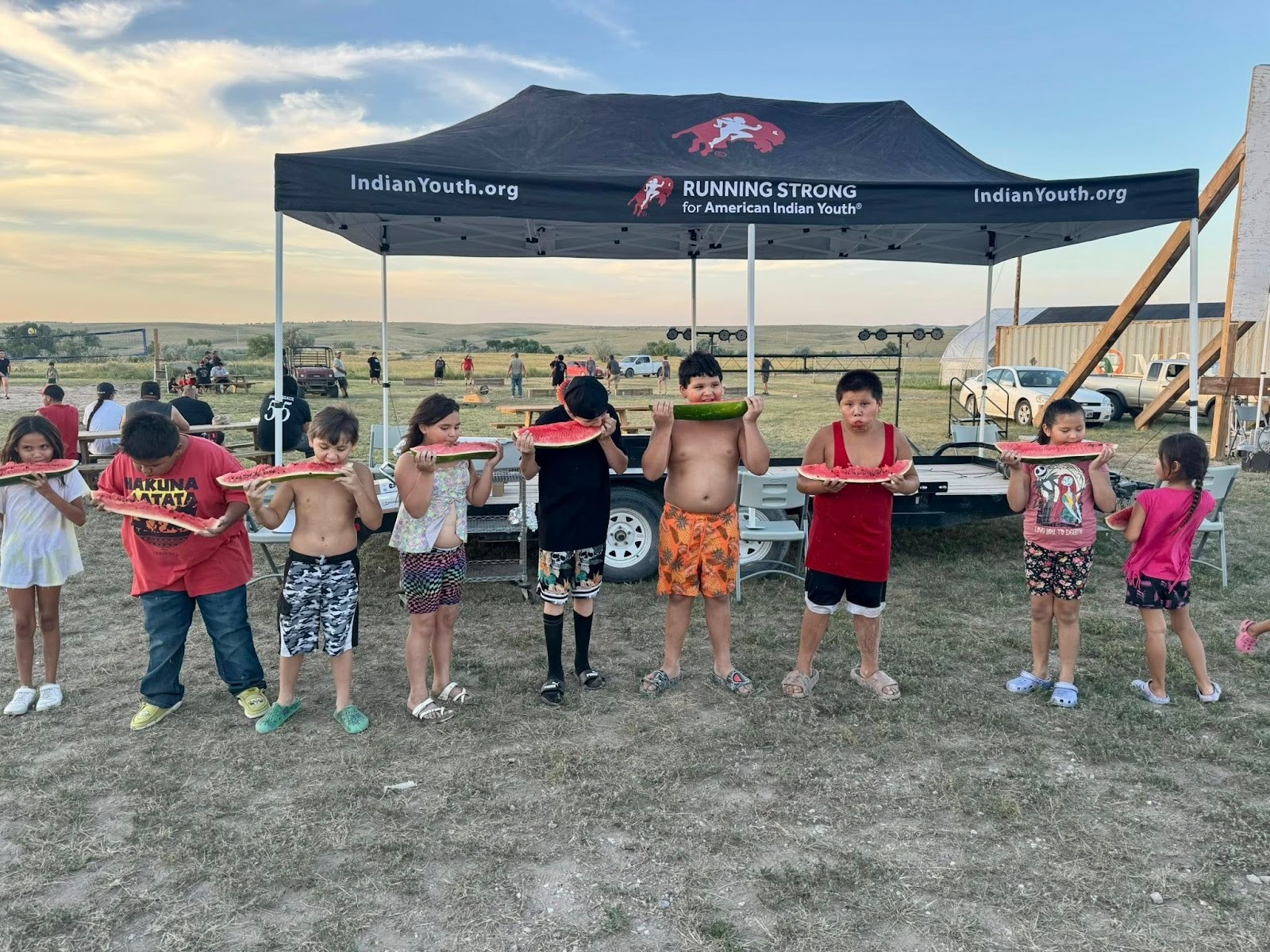
Pine Ridge is not defined only by hardship, but by resilience and the determination to build a stronger future. At Running Strong for American Indian Youth®, we support community-led solutions that address hardships such as clean water, food security, dignity, and opportunity.
Mni Wiconi – Water is Life
Since 1986, clean water has been central to our mission. While many households are connected to the Oglala Sioux Rural Water Supply System, hundreds still wait for affordable access. Through Clean Water projects, we have connected more than 500 families on the Pine Ridge Reservation to safe, running water, with additional pilot programs on the Navajo Nation and the Crow Nation. Over the years, our work has also included 185 water connections, 409 wells, and 155 hydrants, bringing life-changing water access to 3,563 people. Although no longer one of our full-time programs, since FY16, 155 projects have benefited over 4,283 individuals. For families once relying on unsafe sources, water access restores health and dignity.
Fostering Food Sovereignty
Food insecurity is widespread in Indian Country, and Pine Ridge is no exception. Through Food Sovereignty programs, families grow their own produce, learn traditional gardening, and improve health with access to fresh foods. Each year, up to 100 gardeners train in Medicine Root classes, 4,225 seedlings are distributed through Slim Buttes, and 40,000 lbs of produce are grown in community gardens and greenhouses. Food boxes and Smart Sacks provide direct support, while summer programs serve thousands of meals to children. Together, these efforts reduce dependence and revive cultural connections to the land.
Meeting Health & Wellness with Dignity
Generational poverty leaves many families without essentials. Our Health & Wellness programs provide coats, shoes, blankets, and hygiene kits, while Heat Match ensures families stay warm through South Dakota winters. Since opening the Eagle Butte Food Pantry in 1996, we have distributed over 35,700 food boxes; more than 680,000 lbs of food. Winter wear programs have supplied tens of thousands of coats, boots, and hats, ensuring children and elders face the cold with the gear they need to stay warm, happy, and healthy.
Empowering the Next Generation of Leaders
Through our Youth Development programs, we invest directly in young leaders. Dreamstarter has invested over $7.3 million and impacted 174k people since 2015, combining funding with mentorship and training. Our Youth Development programs provide safe spaces, backpacks, and meals; 9,000 backpacks and 19,000 summer meals in 2024 alone. These initiatives help Native youth strengthen their communities while building confidence and pride in their heritage.
MicroEnterprise Development and Local Job Creation
Limited job opportunities on Pine Ridge are a direct result of decades of underinvestment and the absence of private-sector infrastructure. To help address these gaps, we have invested in microenterprise development to support Native entrepreneurs and create community-based employment.
Through youth entrepreneurship grants, mentorship, and small business support, we have helped launch community-centered ventures such as Ekowah Coffee (based in Oklahoma) and Dave’s Tire & Repair Shop; the first locally owned shop of its kind, providing critical services and steady local jobs.
Launched in 2022, our Microenterprise Development program provides interest-free $5,000 microloans, training, and mentorship. Between 2022 and 2025, it helped 26 Native-owned microbusinesses grow across four tribal communities, including Pine Ridge, creating local income and supporting economic sovereignty.
Across 40 years, our microenterprise efforts have helped generate local employment, support emerging Native business leaders, and build stronger, more self-sustaining tribal economies.
A Beacon of Hope: The Oyate Ta Kola Ku Community Center
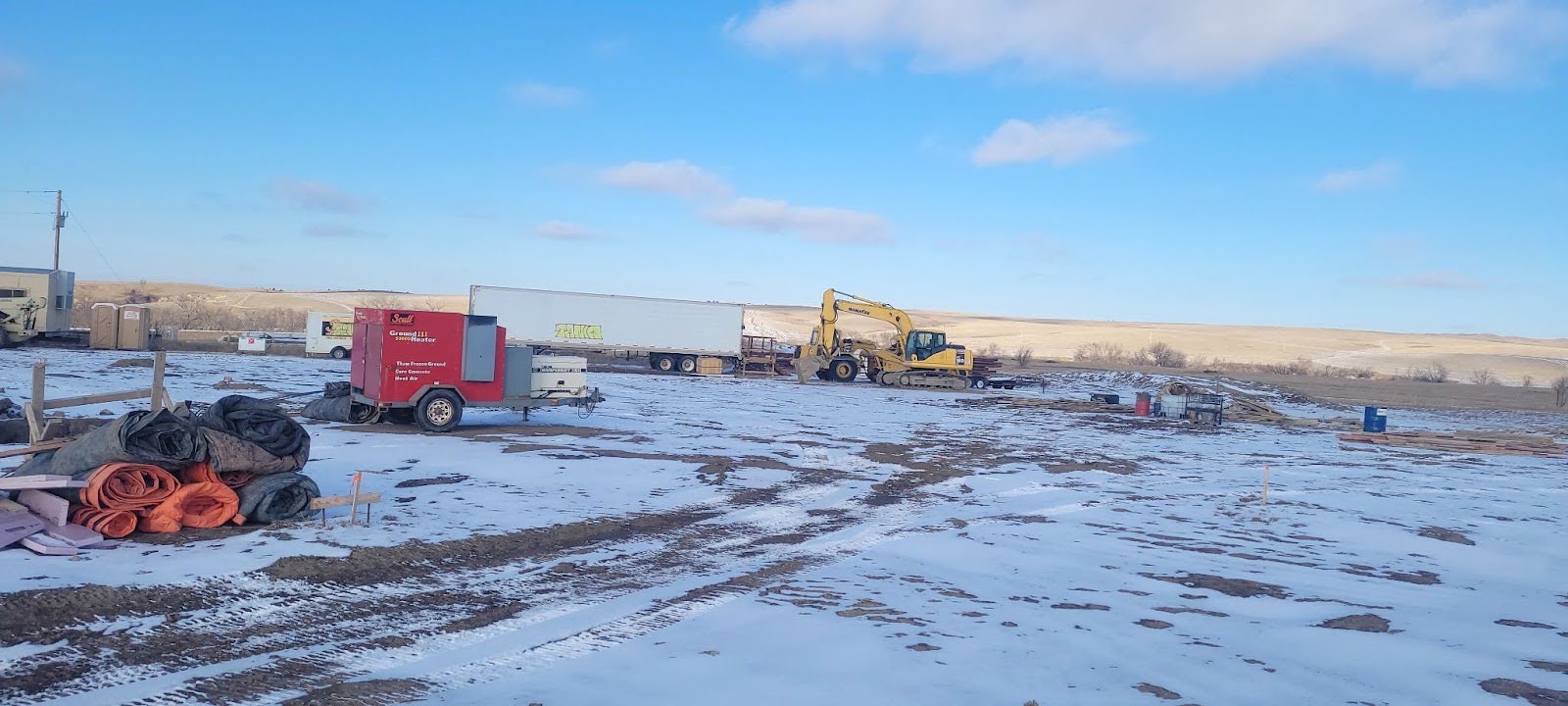
At the heart of Pine Ridge, the Oyate Ta Kola Ku Community Center stands as a physical embodiment of hope and empowerment. This 21,000-square-foot, state-of-the-art facility was built to provide a safe, healthy, and accessible space where all generations can gather, learn, and grow together.
The center offers much more than a building. Its gymnasium promotes health and recreation, while teaching kitchens provide space for cooking classes that strengthen food programs and nutrition education. Sewing and art classrooms allow cultural traditions to be passed down, while public Wi-Fi connects families to opportunities often out of reach in rural areas. Gardens surrounding the center support food sovereignty initiatives, tying the facility directly to community-led solutions.
By housing youth mentoring, cultural activities, and wellness programs under one roof, the center integrates the many efforts already underway to strengthen Pine Ridge. It is a place where young people discover their potential, elders share their wisdom, and families gather to celebrate, learn, and support one another.
The story of Pine Ridge is not only one of historical struggle, but also of cultural strength and forward-looking progress. While challenges remain, the Oglala Lakota people continue to shape a brighter future grounded in resilience and tradition. We invite you to learn more about these solutions and consider supporting our programs at Running Strong so we can continue to support the families of Pine Ridge for generations to come.