Growing Their Own: The Gardeners of Medicine Root
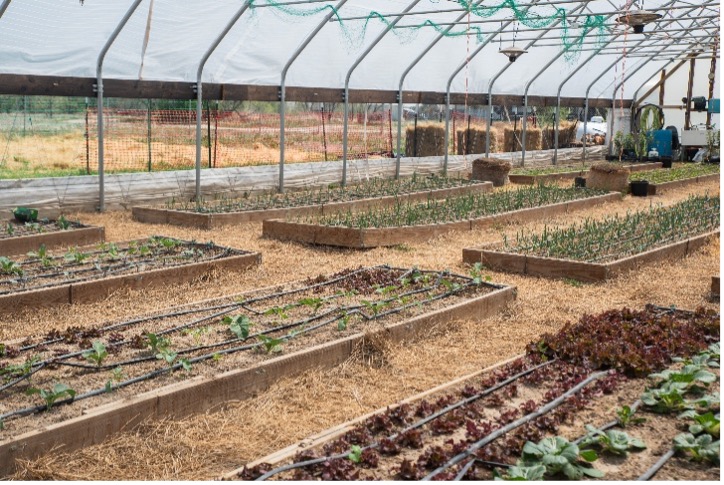
This spring, Running Strong staff visited Pine Ridge to see the Medicine Root Gardening Program at work and to talk with the people building it — the manager who runs it, the class members putting in their first gardens, and the elders and children learning alongside them.
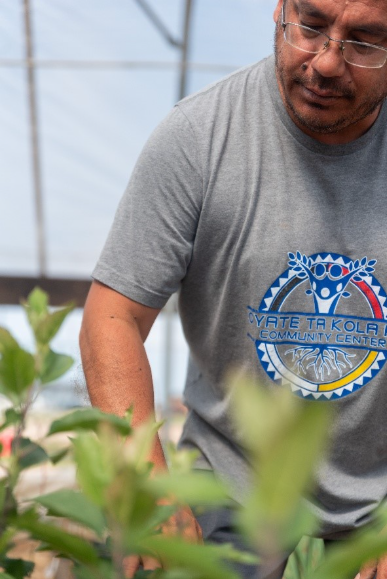
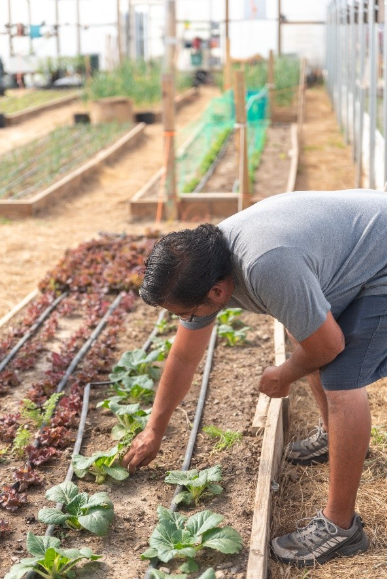
The manager: Doug Pourier
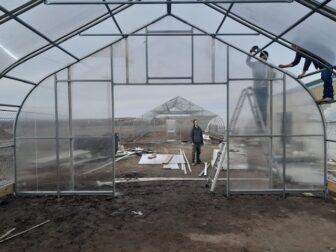
Doug Pourier came to the Oyate Teca Project as a volunteer. He’d earned a degree in general construction, but work was scarce, so he offered his time to help put up the building.
“I decided to donate my time and work on the building,” he told us.
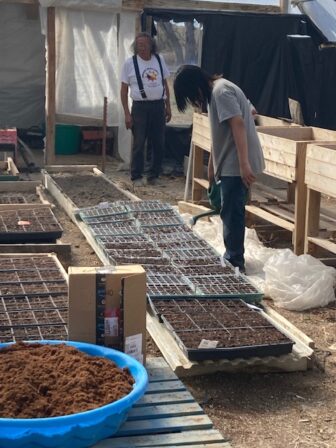
In 2015, someone asked whether he’d like to take the Medicine Root gardening class. He did, and found he had a knack for it. When the instructor retired two years later, Doug took the job. “And now I’ve been here ever since.”
Ask Doug why growing food matters here, and he’ll tell you it’s about independence. Fresh produce isn’t always easy to come by on the reservation, and he’d rather people not have to depend on a store — or a ride to one — for it. A garden closes that gap. You plant it, you tend it, you eat from it, and the whole chain belongs to you.
He points to a former student named Julie, who lives well outside town and joined the program to eat better. She went further than that: she started her own farmers market, and it’s now bringing in income of her own.
The kids
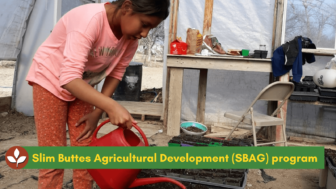
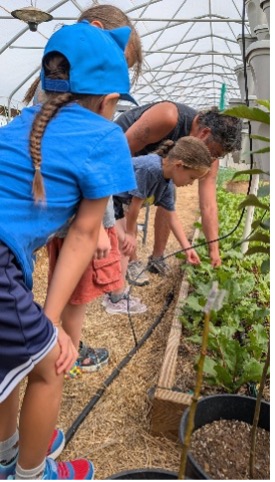
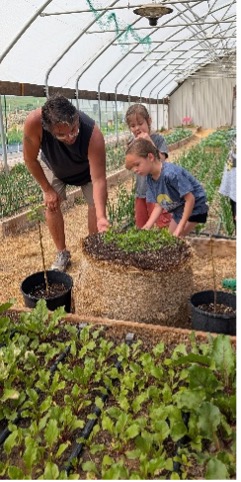
Some of the program’s sharpest gardeners are its youngest. Children come to the center with their parents, notice the seedlings, and want in.
“They see what they’re doing, and they really get into it,” Doug says. When kids spot the trays, they run over asking what everything is and how they can do it too. So Doug shows them. He gives each one a bowl to plant their own lettuce and sends it home in their care.
“Doug, Doug, our lettuce is coming up,” they told him one time.
And once they’ve eaten lettuce they grew themselves, the store version doesn’t measure up. Doug wants that instinct to stick — with these kids and with his own son — so the knowledge keeps moving forward. “He can carry it on into the future whenever I can’t do it,” he says. “That’s my end goal.” His bigger one: “for everybody here on the reservation to have a garden in their backyard. That would be the perfect little world that we could all live in.”
The first-timer: Joleen Abourezk
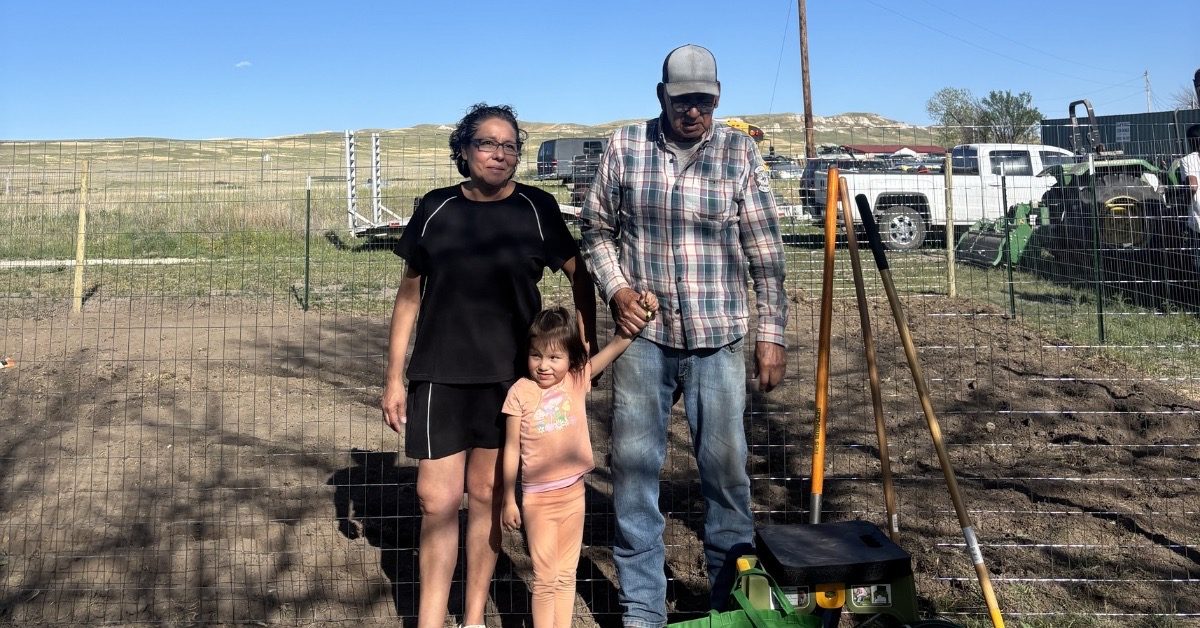
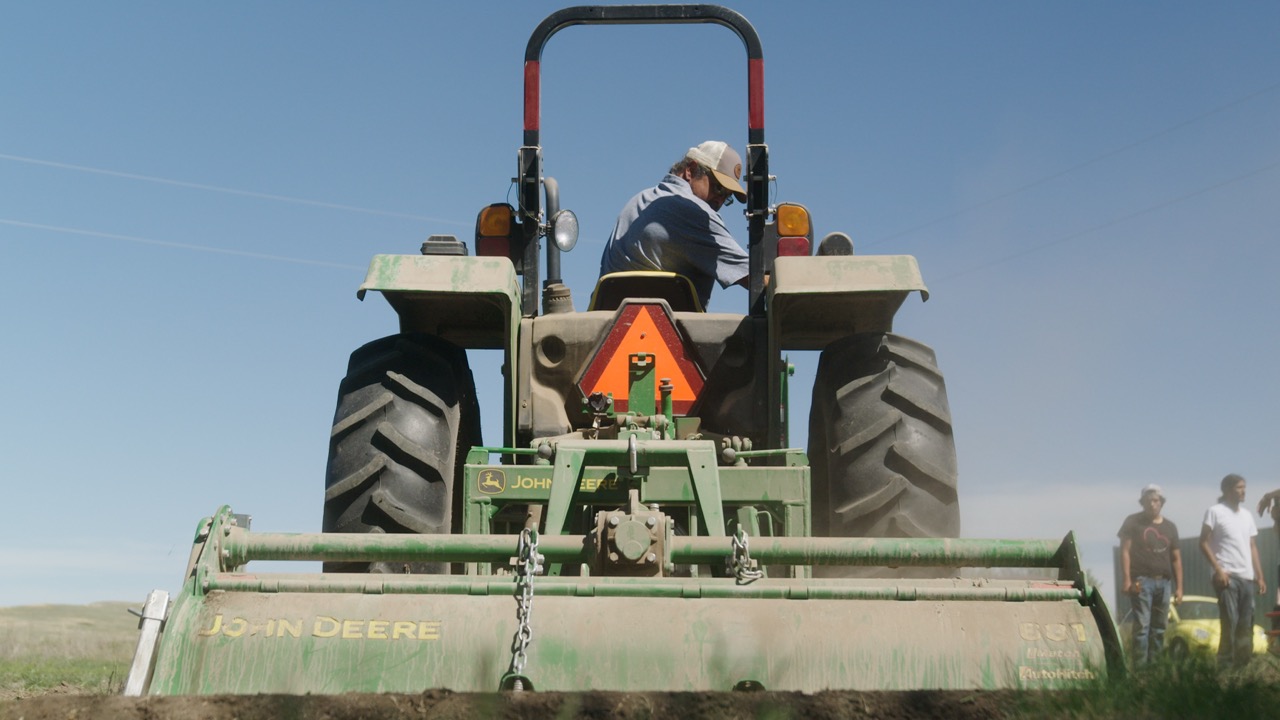
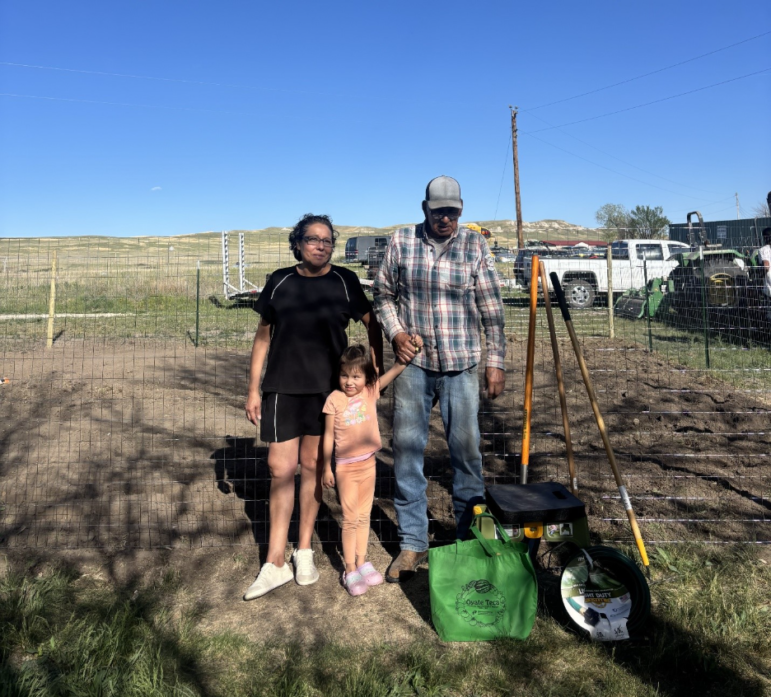
On May 14, Running Strong staff watched a garden go in over the course of an afternoon. Joleen Abourezk, in this year’s beginner class, had a plot in her backyard tilled, fenced, and run with drip lines off a nearby hydrant. Her classroom work was done, and her seeds were ready.
“We were taught how to germinate seeds, so I have some ready to transplant, hopefully tomorrow,” she said.
For Joleen, the appeal is straightforward: it’s healthier, it’s self-sufficient, and the food is simply better. She grew up on it. Her grandfather kept a garden every year nearby, and she remembers picking tomatoes and cucumbers, rinsing them off, and eating them on the spot. “They were just flavorful,” she said. “I notice now that if you buy tomatoes, there’s no taste or flavor to them.”
She sees gardening as part of a longer story, too. “If you go way back, we didn’t really stay in one place — we followed the buffalo herds,” she said. “But after we were put on reservations with a plot of land, a lot of people did garden. It’s part of our culture, more recently. It’s just being able to feed yourself — depend on yourself.”
She’s already thinking past the first harvest. She has a cellar for storing potatoes and wants to learn canning so her garden carries her through winter. “All of that stuff, I’ve always been interested in, but never had the time. And now I do.”
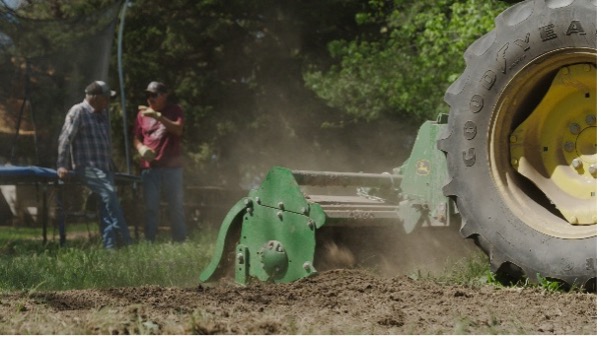
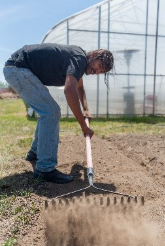
Gardening keeps you humble. By early June, freeze warnings had her waiting on the ground to warm up. She got three varieties of tomatoes transplanted and looking good, then a week of heavy rain, hail, and wind left them “kind of pitiful,” though she’s betting they’ll pull through. Her five kinds of peppers are in. Her herbs are waiting out one more line of thunderstorms.
To the supporters who make Medicine Root possible, Joleen offered thanks for the classes, the books, an instructor who answered her questions, and gardens worth walking through. “It really is encouraging,” she said. What she wants most is for the opportunity to spread. “If they see some gardens and what they could grow, I think it will encourage them to try. I know a lot of other people would like the opportunity to have a garden as well.”
The elder: Frances Abourezk
Joleen’s father, Frances, 83, was born and raised on Pine Ridge, and he stood by watching his daughter’s garden take shape. He remembered his grandmother watering hers with a five-gallon bucket. “It was out of necessity, and it became beneficial to have a garden,” he said. “I always wanted to try it, and I didn’t get the opportunity. My daughter’s getting the opportunity.”
The ground going in that day had never been gardened before — plowed and fenced for the first time. “That is such a big help, because it’s so hard to start any little project,” he said. “But this is a good start.”
Then, the line that sums up the whole afternoon: “I’m 83 years old, and this is the first garden I’ll ever have. I’m just ready to do a lot of eatin’ this fall.”
Growing Leaders
Medicine Root works because it backs people’s own ambitions. A volunteer became a teacher. A student became a farmers-market owner. Kids are learning to grow food they’d rather eat than buy. A family is putting three generations to work on ground that’s never been planted. What Running Strong’s supporters provide — the classes, the books, the fencing and drip lines, the seedlings in a child’s hands — is the start. The gardeners do the rest, and they intend to keep doing it long after the first harvest is in.