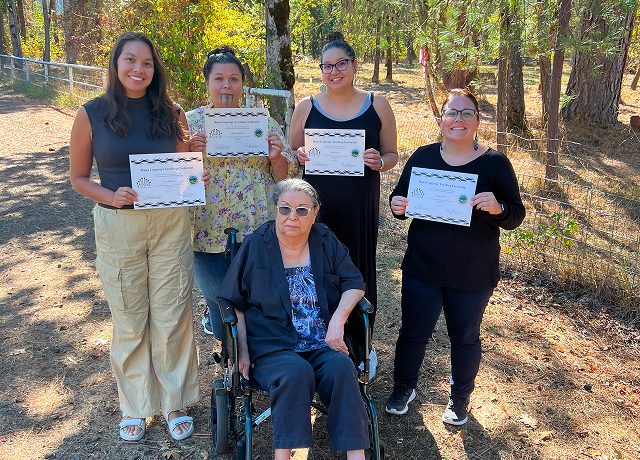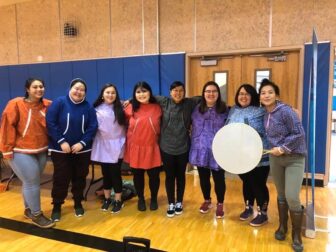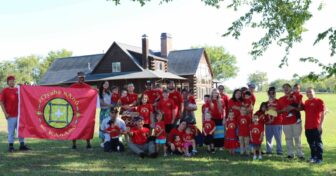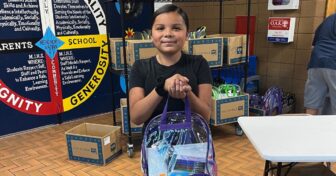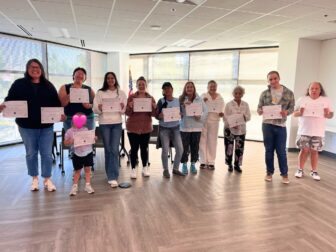
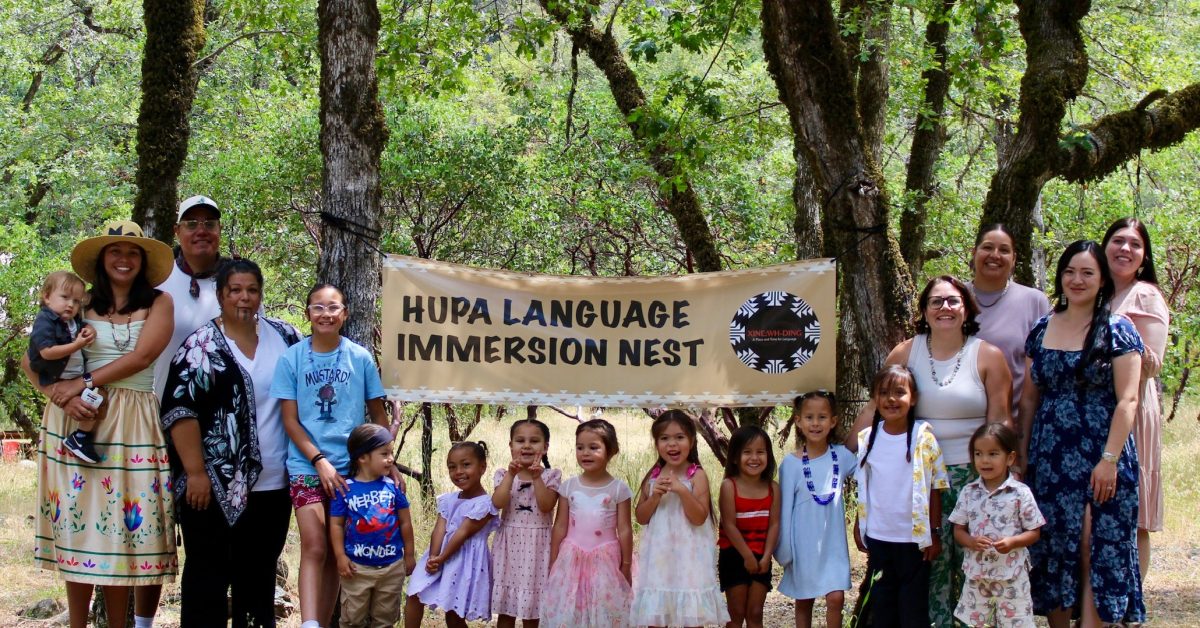
From September 2025 through May 2026, Xine:wh-ding (A Place and Time for Language) served 100 children and 50 adults aged 0-90 through its Hupa Language Immersion Nest (HLIN) located on the Hoopa Valley Indian Reservation in Hoopa, California, thanks to the supporters of Running Strong for American Indian Youth®.
Sara Merrick (Hoopa Valley Tribe), a 2017 Running Strong Dreamstarter, used her original $10,000 grant to host a week- long Hupa Language Immersion Camp for children ages 4 to 7 on the reservation, and in 2020 she received a $50,000 Dreamstarter GOLD grant to expand her work into a four-week Hupa Immersion Summer School. Then in 2023, Sara launched the Hupa Language Immersion Nest, the first full-time early childhood language program in the community.
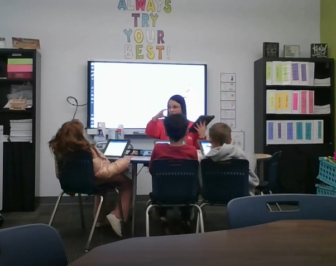
In August, Sara reported that the Hupa Language Immersion Nest served 8-10 Na:tinixwe (Hupa) families in her community during its third year of full-time programming where children aged from 2½ to 5 years old received Hupa language immersion instruction for at least four days a week.
“Over the past two years of programming, our Nest students and their Hupa speaking ability have grown exponentially,” she said, adding that their focus continues to be “on expanding the language speaking and teaching ability of our students’ families and our Nest teachers to ensure we continue to grow alongside our students.”
Sara reported that during the past year, they also successfully completed 26 chapters of the first level of their Na:tinixwe Mixine:whe (Hupa Language) Fluency Transfer System as inspired by the Salish School of Spokane, Washington, which consists of creating a series of language learning resources anchored in recordings of elders who spoke Hupa as their first language.
This system, paired with regular language classes and Nest gatherings, helped to streamline the process of furthering the fluency of its current teachers and families as well as establish a training program for new teachers in the future, as they furthered their organization’s growth and expansion, she reported.
Each chapter of the Fluency Transfer System included a board book, video and game featuring audio recordings of first-language Hupa speakers that they used in the classroom and sent home with all of the families, allowing children and families to continue practicing at home.
“We also conducted monthly family language events to practice the language that was sent home,” said Sara, adding, “the students grew so much over the course of the Nest year both physically and intellectually.”
Sara said one of the challenges they faced was keeping up with the pace of producing a new chapter of curriculum each week.
“We had to undertake lots of troubleshooting and ride out the learning curve of developing our fluency transfer system,” she explained.
“However, by the end of the Nest year we found a really good groove, format and event procedure for creating books with culturally grounded content that we feel confident about continuing on with for the upcoming year,” she told us.
Another major challenge they faced this year “was the passing of our dear teacher, Verdena Parker.
“We are very thankful to have decades of material from her to continue our learning as well as language material from older Hupa elders and speakers.
“This summer we’ve been able to start to really organize all of our recordings we’ve done with her that aren’t already archived so that we are able to use them in a much more streamlined manner during the Nest year.
Looking forward, Sara said that “the focal point of our project and the overall goal of the Hupa Language Immersion Nest is to create a new generation of fluent Na:tinixwe Mixine:whe speakers and strong community members, spiritually and academically, who are prepared to take on any future endeavors they may desire.
“As we enter our fourth year of full-time programming, 1½ – 5-year-old children ages 1½ to 5 will receive four to six hours of Hupa language immersion instruction at least four days a week from September 2026 through May 2027.”
Verdena’s Story – A Lasting Legacy
Verdena Leona Parker (March 1, 1936 – March 7, 2026) was the last fluent speaker of the Hupa language. She passed away six days after her 90th birthday.
“While other children of her generation were sent to boarding schools, isolating them from their families, culture and stripping them of their language, Parker was raised by her grandmother who spoke Hupa with her.” Sara told us that Verdena grew up speaking Hupa as her first language and did not speak English until she went to school. “While in school she was teased and punished for speaking our language,” said Sara.
Despite the challenges, Parker continued to speak Hupa with her mother daily, maintaining a high level of fluency that had otherwise been lost in her generation.
Beginning in 2008, she regularly worked with researchers at the University of California, Berkeley and Stanford University to provide recordings of spoken Hupa for the documentation of the Hupa language.
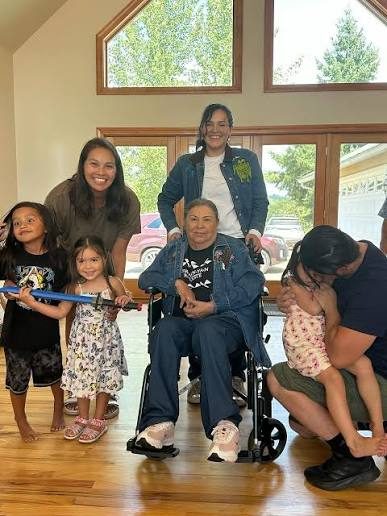
Although Verdena was never able to physically travel to the Hupa Language Immersion Nest given her physical limitations, Sara said they would often update her with stories, photos and videos of the children speaking, laughing and playing in the language as she had when she was a child.
During Hupa Language Immersion Nest teacher training retreats, they were able to bring some students to visit her and share with her what they were learning.
“She was able to speak with them about what we were going to eat and play games with them,” said Sara.
“We were also able to celebrate her 90th birthday with her just before her passing and the children all proudly sang “Me:nundiyay na:ła’” (Happy Birthday) to her to which she replied ‘niwho:ng!’ (it is good).”
Reflecting on the challenges Verdena faced as a child, Sara told us, “However, she was determined to hold tight to the language and continued to speak it throughout her entire life.
“It was her dream for children to be able to speak our language once again without being punished or teased.
“Through her work that was instrumental to our program, she was able to see this dream come true.”
Sara added that Verdena’s husband relayed the message that in her final days she wanted us to know that she “knew she was leaving the language in good hands” with our teachers and students.
“This truly means the world to us, and we were so thankful she got to see our collective dream realized in her lifetime.
“We continue to navigate the loss of our teacher but plan to continue to use her teaching and create resources that still highlight her voice so that she will be able to continue to teach the children even though she is no longer physically with us.”