
Indigenous Peoples’ Day is a time to recognize and honor the histories, cultures, and continued presence of Native communities across the Americas. Indigenous Peoples’ Day 2026 falls on Monday, October 12, 2026, and continues to grow in recognition as more communities seek meaningful ways to acknowledge Native voices, resilience, and sovereignty.
This guide explores what Indigenous Peoples’ Day is, why it’s observed, its history, and how it compares to Columbus Day. We’ll also cover how you can celebrate it respectfully, meaningful ways to support Native communities year-round, and why this observance matters far beyond a single day on the calendar.
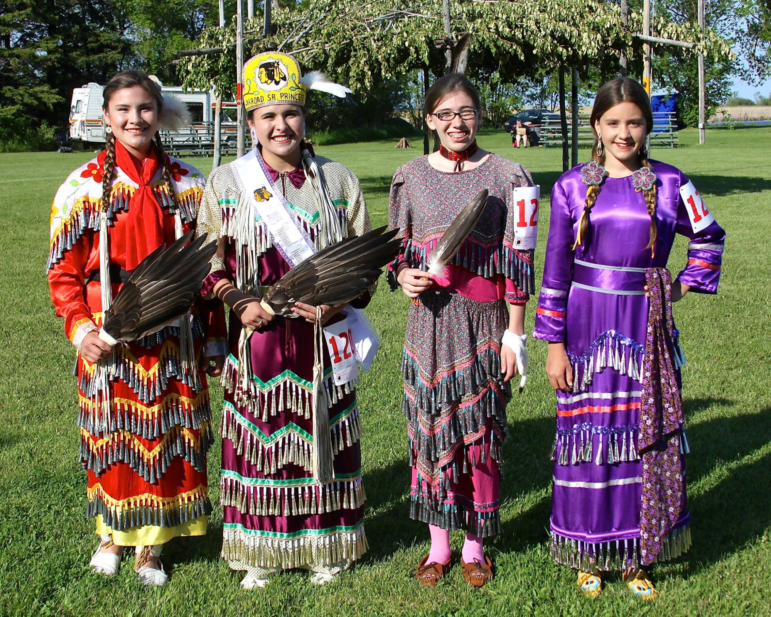
At Running Strong for American Indian Youth®, we work directly with Native American communities through programs focused on cultural preservation, food sovereignty, youth leadership, and long-term community wellness. That perspective shapes this guide, grounding it in the lived experiences and priorities of Native communities rather than treating the day as simply a historical topic.
Whether you’re looking for the date, trying to better understand what the day represents, or searching for meaningful ways to honor and support Native communities, this guide is here to help you engage with the observance in a more informed and respectful way.
Indigenous Peoples’ Day is an observance that honors the histories, cultures, resilience, and continued presence of Indigenous peoples. Rather than focusing only on the past, it recognizes Native communities as living cultures that continue to shape and strengthen society today.
The meaning goes beyond a single holiday. It encourages a more accurate understanding of Native American history, including both the harms caused by European colonization and the ongoing contributions of Indigenous communities.
Part of why we celebrate Indigenous Peoples’ Day is because Native history is often overlooked or inaccurately taught. Educational efforts such as the Smithsonian’s Native Knowledge 360° initiative help address these gaps by providing more complete and accurate resources about Indigenous histories and perspectives.
Today, there are 574 federally recognized tribes in the United States, along with many additional tribes and Native communities that are not federally recognized but continue to preserve their cultures and traditions. The day is currently observed by 17 states and Washington, D.C., with more communities recognizing it each year.
To better understand Native experiences, you can learn more about the Strengths and Challenges of Native Youth Today.
Indigenous Peoples’ Day is celebrated on the second Monday of October each year. In 2026, it falls on Monday, October 12. The date changes annually because it follows the second-Monday formula rather than a fixed calendar date.
|
Year |
Date |
|
2026 |
|
|
2027 |
Monday, October 11 |
|
2028 |
Monday, October 9 |
For readers checking when Indigenous Peoples’ Day is, the observance falls on the same date as Columbus Day, which has been a federal holiday since 1937. This overlap is intentional as the day was created in part to challenge the narrative that America was “discovered” by Christopher Columbus and to recognize that Indigenous peoples have lived on and cared for these lands since time immemorial.
It’s also important not to confuse this observance with the United Nations’ International Day of the World’s Indigenous Peoples, which takes place each year on August 9. While both observances honor Indigenous communities, they are separate observances with different origins and purposes.
Indigenous Peoples’ Day is celebrated to honor the histories, cultures, and contributions of Indigenous peoples while promoting a more accurate understanding of American history. It also recognizes the resilience of Native communities who have endured centuries of colonization, displacement, and forced assimilation.
Part of why we celebrate is visibility and recognition. Native histories and perspectives have often been overlooked or misrepresented, and the observance creates space for Indigenous communities to be acknowledged on their own terms.
The history is also connected to correcting historical narratives about colonization. Historians estimate that Native populations declined by as much as 95% in the 130 years following European contact due to violence, disease, and forced displacement.
At the same time, the meaning is rooted in resilience, not victimhood. Indigenous peoples continue to preserve their languages, cultures, artistic traditions, ecological knowledge, and community leadership across generations.
Celebrating the day also means recognizing challenges that Native communities are still rebuilding, fighting, or struggling with the consequences of colonization today. Including food insecurity, lack of clean water, and language loss. To continue learning, explore our resource on Understanding and Preserving Native Heritage.
Indigenous Peoples’ Day is not a standalone federal holiday. Columbus Day remains the official federal holiday observed on the second Monday of October, which means federal offices and banks still recognize Columbus Day at the national level.
However, its observance has continued to expand across the United States. Currently, 17 states and Washington, D.C., formally commemorate Indigenous peoples on the same date.
Some states, including Maine, Vermont, New Mexico, and Washington, D.C., have replaced Columbus Day entirely with Indigenous Peoples’ Day. Others, including Montana, Nebraska, Ohio, Pennsylvania, Rhode Island, and Alabama, recognize both holidays simultaneously.
This evolving landscape reflects growing awareness of what Indigenous Peoples’ Day represents and a broader interest in a more inclusive understanding of American history.
The history reflects decades of advocacy led by Native leaders, communities, and organizers working to create a more honest and inclusive recognition of Indigenous peoples in the United States.
The concept was first formally proposed in 1977 at the International Conference on Discrimination Against Indigenous Populations in the Americas, held in Geneva, Switzerland, under United Nations sponsorship. However, the movement began much earlier through Native-led efforts to create a day honoring Indigenous peoples rather than European colonizers.
In the early 1900s, Native leaders such as Dr. Arthur C. Parker and Red Fox James advocated for national recognition of Native peoples. Their efforts helped lead New York to establish the first American Indian Day in 1916.
Major moments in the history of Indigenous Peoples’ Day include the following milestones, as documented by Smithsonian Magazine:
Columbus Day and Indigenous Peoples’ Day are both observed on the second Monday of October, but they recognize different histories and perspectives. Columbus Day became a federal holiday in 1937, influenced in part by Italian-American advocacy groups, while Indigenous Peoples’ Day was first proposed in 1977 and officially observed by Berkeley, California in 1992. Columbus Day commemorates Christopher Columbus’s arrival in the Americas, while Indigenous Peoples’ Day honors the histories, cultures, and continued presence of Indigenous peoples.
Today, some states and cities observe only Columbus Day, some recognize only Indigenous Peoples’ Day, and others acknowledge both observances on the same date. The continued growth of Indigenous Peoples’ Day reflects increasing interest in learning about Native histories and recognizing Indigenous communities in the present day.
There are many meaningful ways to celebrate Indigenous Peoples’ Day, from learning more about Native history to directly supporting Native communities and creators. The most impactful actions are often the ones that continue beyond a single day and help build long-term awareness, respect, and connection.
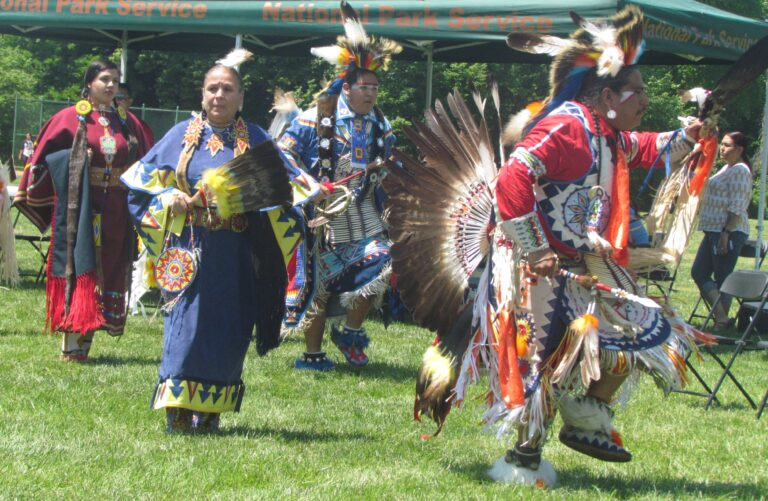
Running Strong for American Indian Youth® was founded by Olympic gold medalist Billy Mills, a member of the Oglala Lakota Nation born on the Pine Ridge Reservation. We work alongside Pine Ridge and other Native communities through programs in clean water, food sovereignty, youth development, and cultural revitalization.
One simple but meaningful first step is learning which Indigenous nations originally lived on the land where you currently live, work, or study. Resources like Native-Land.ca help people better understand the histories and communities connected to their region.
This is also where many people first encounter land acknowledgments, statements that recognize the Indigenous peoples who have longstanding ties to a place. While acknowledgments are not a complete action on their own, they can help build awareness and encourage deeper learning.
Many communities host events around Indigenous Peoples’ Day, including powwows, cultural festivals, museum exhibits, film screenings, and educational gatherings. These events offer opportunities to learn directly from Native communities and celebrate Indigenous cultures in respectful, community-centered spaces.
Readers can check local tribal nation websites, community calendars, and cultural centers for events in their area. Institutions such as the Smithsonian’s National Museum of the American Indian (NMAI) in Washington, D.C., and New York also regularly host Indigenous Peoples’ Day programming.
Another meaningful choice is engaging with books, films, podcasts, and artwork created by Indigenous storytellers and educators. Listening directly to Native voices helps create a more accurate and personal understanding of Indigenous histories and experiences.
Readers can explore resources such as the American Indian Youth Literature Award list to discover books by Native authors and illustrators.
One recent project that highlights Indigenous storytelling is Remaining Native, a documentary connected to 2022 Dreamstarter Ku Stevens (Yerington Paiute). Directed by Native filmmaker Paige Bethmann (Haudenosaunee), the film follows Ku as he retraces the 50-mile route his great-grandfather escaped from the Stewart Indian Boarding School as a child.
The documentary connects personal family history with the broader legacy of boarding schools and cultural survival. It also reflects how Native youth continue to carry stories forward through leadership, art, and remembrance.
Supporting Indigenous-owned businesses is another practical way to celebrate Indigenous Peoples’ Day and invest directly in Native communities. Purchasing from Native artists, makers, and food producers helps sustain cultural traditions while supporting economic opportunity.
Art programs like Running Strong’s online store Intertribal Creatives which is a marketplace featuring only products created by Native artists, artisans, and entrepreneurs. Helping Native entrepreneurs grow their work and reach broader audiences.
Readers can also explore Native American Art: History, Traditions, and Contemporary Voices to learn more about Native art traditions and contemporary Indigenous creators.
One of the most impactful ways to celebrate Indigenous Peoples’ Day is to support organizations doing year-round work alongside Native communities.
At Running Strong, our programs focus on long-term, community-driven solutions shaped by Native leadership. In FY2025 alone, we served more than 82,000 people across 20 states through initiatives centered on food sovereignty, youth development, clean water access, cultural preservation, and emergency support.
That work includes distributing 17,000 food boxes to families, growing more than 25,000 pounds of fresh produce through the Medicine Root Garden Program, and helping connect families on Pine Ridge Reservation to safe water access in communities where many homes still lack reliable running water.
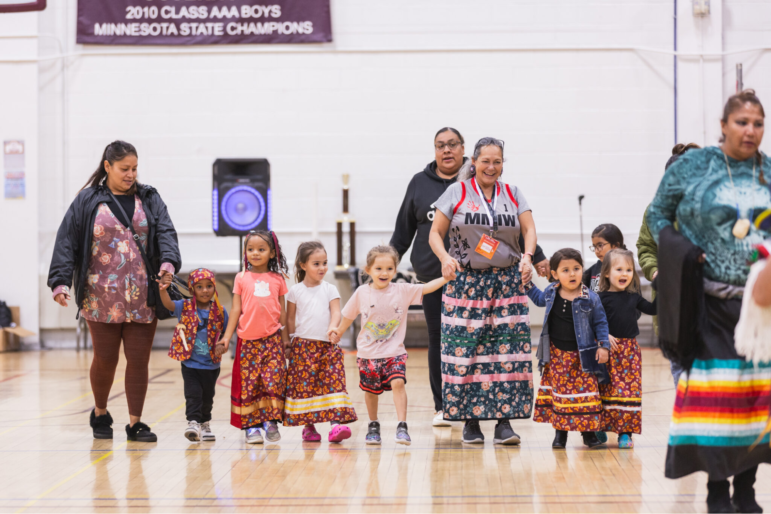
We also support Native youth directly through programs like Dreamstarter, which impacted more than 2,000 students, and the Oyate Ta Kola Ku Community Center, where more than 1,000 young people regularly participated in cultural and community programming.
Cultural revitalization remains a core part of this work. Through our Culture and Language Program, we support initiatives such as the Hupa Language Immersion Nest, Brave Heart Society, and the Isnati Coming of Age Ceremony, helping Native youth strengthen connections to language, identity, and tradition across generations.
Supporting this work can take many forms. Readers can:
Indigenous Peoples’ Day is an important opportunity for recognition and reflection, but the needs and priorities of Native communities continue year-round. Ongoing support can include following Indigenous creators and educators, staying informed about Native issues, supporting policies that uphold Tribal sovereignty, and contributing to organizations working directly alongside Native communities. Even small, consistent actions can help strengthen awareness, cultural preservation, and long-term community well-being.
No. Indigenous Peoples’ Day and Native American Day are separate observances, though both honor Native communities and cultures. Indigenous Peoples’ Day is observed on the second Monday of October, while Native American Day varies by state and region.
The observance is called Indigenous Peoples’ Day to recognize and honor the Indigenous peoples who lived on these lands long before European colonization. The name reflects a focus on Native histories, cultures, resilience, and continued presence.
Because Columbus Day remains the official federal holiday, many banks and federal offices close on the second Monday of October. School closures vary depending on the state, city, or district, especially in places that formally observe Indigenous Peoples’ Day.
Indigenous Peoples’ Day is a U.S.-based observance held on the second Monday of October. The International Day of the World’s Indigenous Peoples is a separate United Nations observance held annually on August 9 to recognize Indigenous communities globally.